

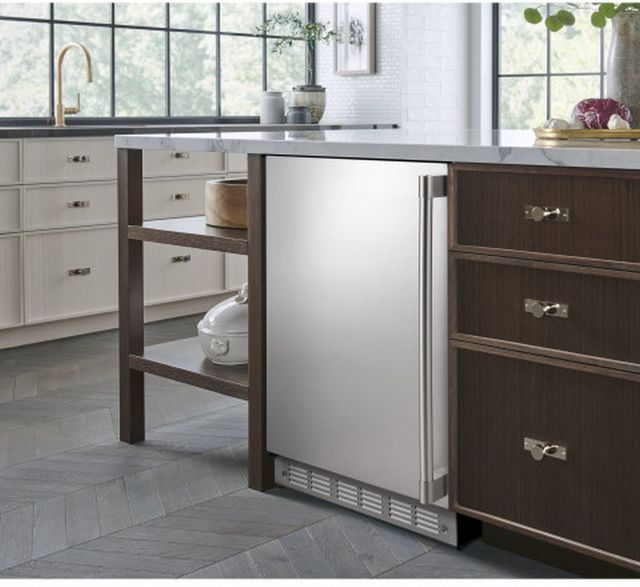
Twelve people are in the house, the oven timer has nine minutes left, and every one of those twelve keeps reaching past the cook to get a drink out of the main refrigerator door. The door hangs open, the compressor runs, someone knocks the gravy boat off the counter, and the person who planned this meal has now been interrupted eleven times in twenty minutes. Down in the finished garage, the dorm-style unit that was supposed to solve this rattles like a lawnmower and has frozen the back row of cans solid. An under counter refrigerator placed where people actually stand is the version of this evening that works.
Compact refrigeration has come a long way from the dorm fridge, and the gap between a real built-in unit and a plug-in box is wider than most shoppers realize. At East Coast Appliance, our specialists fit compact refrigeration into kitchens, home bars, sunrooms, and offices from Virginia Beach and Newport News to Henrico and Chesterfield, which means we have seen every version of this project go right and wrong. This guide covers what an under counter refrigerator actually is, the types available, placement ideas for kitchens, bars, and workspaces, sizing and ventilation requirements, the features worth paying for, and honest trade-offs before you commit.
Add Cold Storage Exactly Where Your Home Needs It
East Coast Appliance stocks undercounter refrigerators, beverage centers, and wine storage from the brands that build them to last, with showroom staff who match a unit to your cabinet opening. Delivery, professional installation, and local service come from our own team across Hampton Roads and Richmond.
Explore under counter refrigeratorsKey Takeaways
- Built-in and freestanding are not interchangeable: A front-venting built-in unit can sit flush inside cabinetry, while a freestanding unit needs air clearance and will fail early if it is boxed in.
- The type has to match what you store: A beverage center holds cans and bottles at drink temperature, while a true all-refrigerator holds food safely, and they are not substitutes for each other.
- Measure the opening, not the appliance: Cabinet width, height including toe kick, and depth including door and handle all have to be confirmed before ordering.
- Placement is the whole point: Cold storage earns its cost by being where people already stand, whether that is an island, a bar, or a home office credenza.
What an Under Counter Refrigerator Is and Why It Matters
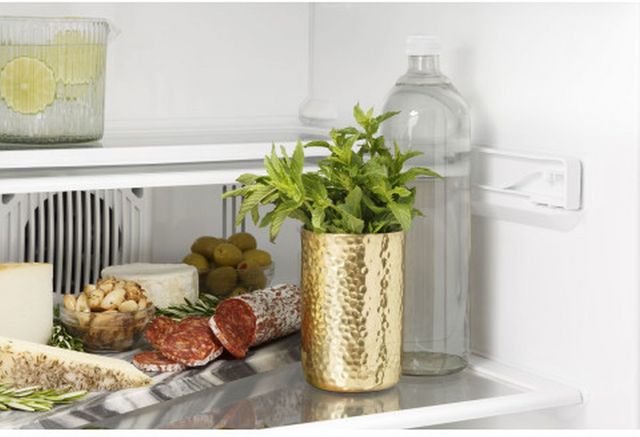
An under counter refrigerator is a compact refrigeration unit built to fit beneath a standard counter, typically around thirty-four inches tall so it aligns with cabinetry, in widths that run from roughly fifteen inches to twenty-four inches. That height is the defining spec, because it lets the unit disappear into a run of cabinets instead of standing in a corner announcing itself.
The bigger idea behind the category is zoned refrigeration. Rather than routing every cold item through one large box in the main work triangle, you place smaller units where the demand actually is: drinks at the island, wine at the bar, lunches in the office. Households want this more every year, partly because open floor plans put the kitchen in the middle of the living space and partly because a single refrigerator door has become a traffic bottleneck.
The Vocabulary, Sorted Out
Shopping for this category is confusing because the terms get used interchangeably. They are not the same thing.
- Under counter or undercounter refrigerator: A general term for any compact unit sized to fit under a counter, regardless of what it stores.
- All-refrigerator: A true refrigerator with solid shelving and food-safe temperature capability, meant for groceries and leftovers.
- Beverage center: Optimized for cans and bottles, usually with a glass door and racking, and typically running warmer than food-safe temperatures.
- Wine cooler: Purpose-built racking and a narrower temperature band tuned for wine storage or serving, in single-zone or dual-zone versions.
- Refrigerator drawers: Two pull-out drawers instead of a swing door, ideal where a door would block a walkway.
- Compact or mini fridge: A freestanding plug-in unit, not built in, and not designed to be enclosed.
Built-In Versus Freestanding
This is the distinction that costs people money when they get it wrong. A built-in unit vents through a front grille at the base, which means it can be installed flush inside cabinetry with zero side or rear clearance. A freestanding unit vents from the sides or the back and needs open air around it to release heat. Put a freestanding unit inside a closed cabinet and it runs constantly, cools poorly, and shortens its own life.
Capacity in this category runs roughly from three to five and a half cubic feet in a twenty-four inch width. In practical terms that means a full case of canned drinks plus mixers, or a couple of shelves of produce and lunch containers, or a few dozen bottles in a wine unit depending on the racking.
Types of Under Counter Refrigeration to Consider
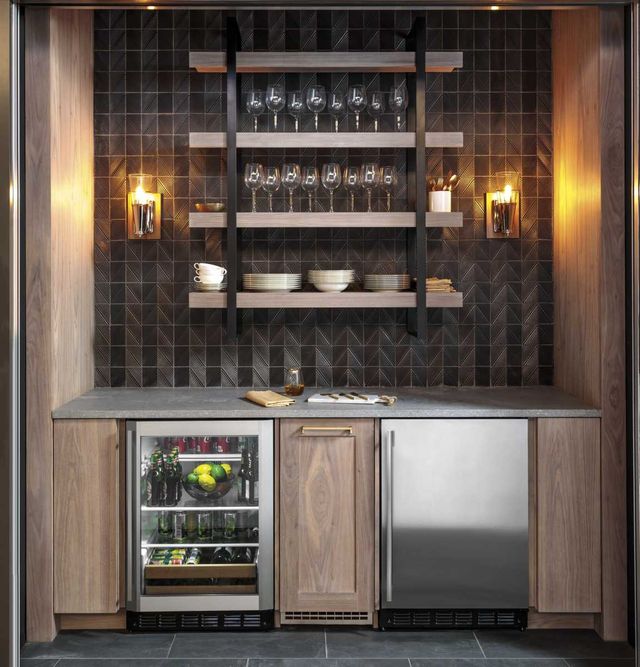
Choosing the type before the brand saves a lot of second-guessing later.
Read more:
8 Unique LG Counter Depth Refrigerator Styles
Under Counter Wine Coolers Ranked by Price
All-Refrigerator Units
Solid door or stainless front, adjustable shelving, and temperature control that holds food-safe conditions. This is the type for leftovers, produce, lunch prep, and overflow groceries. It is the most useful single choice for a kitchen island or a butler pantry.
Beverage Centers
Glass doors, interior lighting, and racking shaped for cans and bottles. Beverage centers usually run at drink-serving temperature rather than food-safe temperature, which is the detail people miss when they try to store leftovers in one. Excellent for bars and entertaining spaces, wrong for the family lunch supply.
Wine Coolers
Wooden or metal racking that cradles bottles horizontally, with a temperature range tuned for wine rather than food. Single-zone units hold one temperature throughout. Dual-zone units maintain two separate compartments, which matters for a household that keeps reds and whites, or that wants wine on one side and canned beverages on the other.
Refrigerator Drawers
Two drawers that pull straight out, so nothing swings into a walkway. They shine in islands and prep zones, and they put contents at a reachable height for children and for anyone who cannot easily bend or reach into a deep cabinet.
Combination Units, Freezers, and Ice Makers
Combination refrigerator and freezer units split a small cabinet into two compartments, which is a real convenience and a real compromise on capacity. Dedicated undercounter freezers pair well with an all-refrigerator in a bar or garage setup. An undercounter ice maker is the companion appliance that finishes a bar, and it is worth planning for early because it needs a water line.
Doors, Panels, and Hinges
Most units offer reversible doors or a hinge-side selection at ordering, and getting that wrong means a door that swings into the room you walk through. Panel-ready fronts accept a cabinet panel so the unit disappears into the millwork entirely. Glass fronts display contents and suit bars, while solid stainless suits kitchens and offices.
Outdoor-Rated Units Are Not Optional
An indoor unit should never be installed outside, even under a covered porch. Outdoor-rated units are built with weather sealing against moisture and insects, UV-resistant materials that will not chalk and yellow, and compressors rated for the wider ambient temperature swings an outdoor space produces. Installing an indoor unit outdoors typically voids the warranty and shortens the life of the machine considerably, and in coastal Virginia the humidity accelerates the damage.
Under Counter Refrigerator Ideas for the Kitchen
The kitchen is where placement thinking pays off most, because the goal is to move traffic away from the cook.
Placements That Actually Solve Something
- Kitchen island: Drinks and snacks at the island keep guests entirely out of the cooking zone, which is the single most requested version of this project.
- Coffee or beverage station: Milk, creamers, and cold brew live at the coffee setup instead of across the room.
- Baking prep area: Butter, eggs, and yeast doughs stay near the mixer and the sheet pans.
- Butler pantry: Staging space for entertaining, where platters and drinks wait without crowding the main refrigerator.
- Lunch-prep zone near the door: Yogurt, juice boxes, and packed lunches on the school-morning path, reachable by the kids themselves.
- Secondary unit near the range: Cold ingredients within arm’s reach of the cooktop during a long cook.
Refrigerator drawers deserve special mention for islands and prep areas. A swing door on an island is awkward at best and a hazard in a narrow walkway, while drawers pull straight out into the space you are already standing in.
Accessibility and Household Flow
A unit at counter level is a genuine accessibility improvement. Children can reach their own drinks without climbing, and anyone who has trouble reaching high shelves or bending into a bottom freezer drawer gains an easy zone at waist height. The second benefit is quieter: every drink pulled from a small unit is a main refrigerator door that stays closed, which stabilizes the temperature where the actual food is stored during holidays and parties.
Integrating It Visually
Panel-ready fronts let the unit take the same door style as the surrounding cabinets. If you prefer stainless, match it to the rest of the suite rather than mixing finishes across a single run. Pay attention to toe-kick alignment so the unit sits at the same depth as the cabinet boxes, since a unit that projects an inch proud of the run is immediately obvious.
Plan around traffic and door swing before anything else. Map the path people walk through the kitchen, then place the unit so an open door or extended drawer never blocks that path or collides with a dishwasher door on the opposite side.
Home Bar and Entertaining Setups That Work
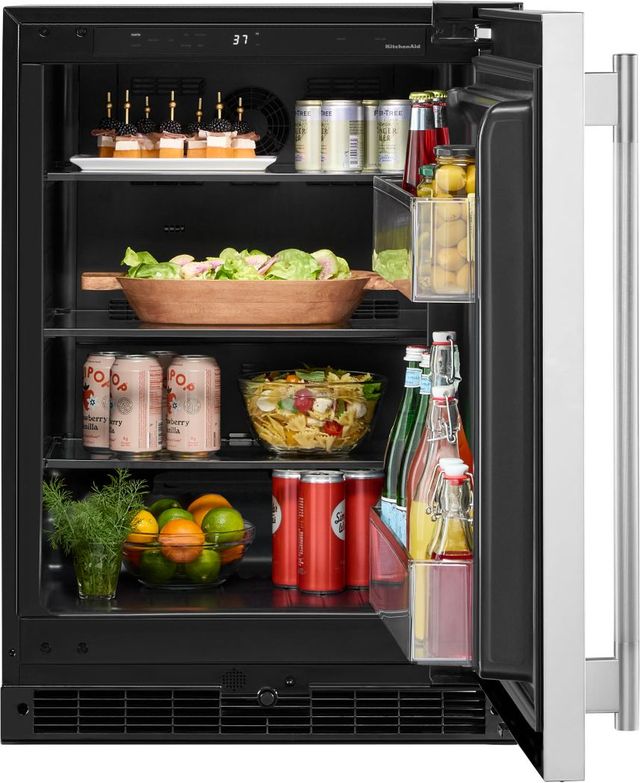
Entertaining spaces are where this category earns its reputation, because a bar without cold storage is just a counter.
Building the Right Mix
A complete bar usually needs two or three pieces rather than one:
- A beverage center for cans, bottles, and mixers at serving temperature
- A wine unit, ideally dual-zone, so reds and whites both sit where they should
- An ice maker or a compact undercounter freezer to finish the setup
Glass door units with interior LED lighting matter more here than anywhere else in the house. A lit, well-organized bar unit is part of the room’s design, and it also stops guests from opening three doors looking for a specific drink.
Security, Noise, and Real-World Details
Door locks move from a novelty to a genuine feature in a bar, especially in a household with teenagers or in a rental property. Noise deserves equal attention: a compressor that is unnoticeable in a kitchen becomes obvious in a quiet media room or a bar that shares a wall with a bedroom. Ask about compressor design and look for units marketed on quiet operation if the space is used for movies or conversation.
Outdoor Kitchens Have Their Own Rules
An outdoor bar needs outdoor-rated construction, a compressor rated for high ambient temperatures, GFCI-protected power, weather protection from wind-driven rain, and thought given to drainage. A covered patio is not the same as an enclosed room, and the equipment has to know the difference.
Capacity Planning for Real Parties
Think in cans and bottles rather than cubic feet. A five cubic foot beverage center holds roughly a case and a half of canned drinks plus a few bottles, which comfortably supports a gathering of eight to twelve people without a mid-party restock. Scale up to a second unit, or add a freezer for ice, when your regular guest list runs larger than that.
Office and Workspace Applications
The home office version of this project is the one people underestimate, and it is often the highest-value placement in the house.
The Home Office Case
Keeping water, lunch, and snacks within reach removes several trips downstairs a day, and for anyone running back-to-back video calls, that is the difference between eating lunch and skipping it. A quiet unit tucked into a credenza also keeps the workday contained in one room rather than spilling into the kitchen every ninety minutes.
Professional and Small Commercial Settings
Break rooms, waiting areas, conference rooms, salons, studios, and small clinics all benefit from built-in cold storage, and the appearance difference is significant. A countertop mini fridge reads as temporary. A built-in unit integrated into millwork reads as part of the space, which matters when clients are sitting in it.
Integration and Electrical Planning
Panel-ready fronts can be finished to match office furniture and built-in casework, so the unit disappears into a credenza. Plan the outlet placement behind the cabinetry during the build, not after, and never run a compact refrigerator on an extension cord or a power strip. A properly placed dedicated outlet is inexpensive during construction and disruptive to add later.
Why It Beats a Countertop Mini Fridge
- Temperature stability: A real compressor and better insulation hold a consistent temperature instead of swinging with the room.
- Durability: Built-in units are engineered for continuous duty over years rather than a few semesters.
- Quiet operation: Better compressor isolation matters during calls, recordings, and client meetings.
- Appearance: Flush installation and a finished front instead of a plastic box on the floor.
- Easy-clean interiors: Removable shelving and proper drainage rather than a manual-defrost freezer shelf.
Sizing, Clearance, and Installation Requirements
This is the section that prevents the expensive mistakes, so work through it before you shop rather than after delivery.
The Pre-Purchase Measurement Checklist
- Cabinet opening width at the narrowest point
- Opening height, measured from the finished floor and including the toe kick
- Opening depth, including the door thickness and any handle projection
- Finished floor height, especially if new flooring is going in later
- Door swing arc, or drawer extension distance, into the room
- Distance to the nearest outlet and whether it sits behind the unit
- Water line access if the unit includes an ice maker
Here is the measurement habit our installation team wishes every buyer had: measure the opening height from the finished floor, and if new tile or plank flooring is going in after the appliance, subtract that thickness plus the setting material before you order. A thirty-four inch unit slid into a thirty-four inch opening becomes physically impossible once three-eighths of an inch of tile and mortar go down, and the fix at that point is cutting cabinetry.
Standard Size Classes
Fifteen inch units suit narrow bar runs and tight office cabinetry. Eighteen inch units split the difference. Twenty-four inch units are the mainstream size and offer the most model choice, the most capacity, and the widest range of interior configurations. Heights cluster near thirty-four inches so the unit tucks under a standard counter, though the exact figure varies by model and some are adjustable at the leveling legs.
Ventilation Is Where Buyers Get Hurt
Say it plainly: installing a freestanding unit inside an enclosed cabinet is the most common and most expensive mistake in this category. Front-vented built-in units exhaust through a grille at the base and are designed for flush installation with cabinetry tight on both sides. Freestanding units release heat from the sides or rear and require several inches of clearance on those surfaces plus airflow above. Trapped heat means a compressor that never cycles off, poor cooling, higher energy use, and premature failure that the warranty may not cover.
Electrical, Water, and Securing
Confirm outlet placement and whether the model recommends a dedicated circuit, which becomes more relevant when a unit shares a circuit with a microwave or a bar blender. Ice makers need a water supply line run to the cabinet, ideally with a shutoff valve accessible without pulling the unit out. Finally, level the unit properly so the door seals and closes on its own, and secure it to the cabinet where the manufacturer calls for it. Professional installation covers all of this and protects both performance and warranty coverage.
Features Worth Paying For and Maintenance Basics
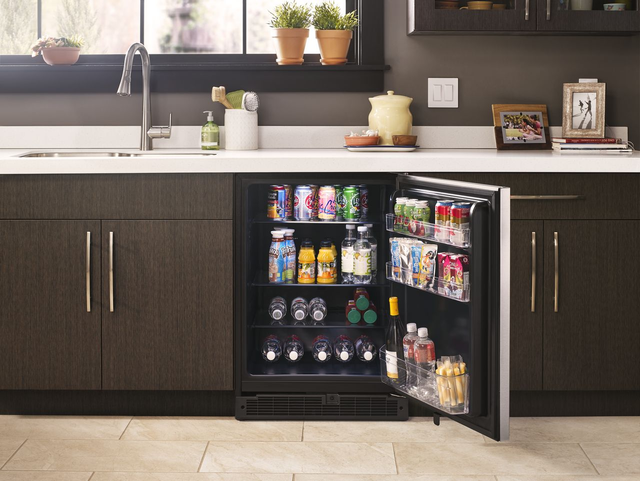
Not every feature earns its price in every use case, so it helps to sort them by what you are actually doing with the unit.
Features That Change Daily Use
- Digital temperature control: Precise setting and a readable display, worth it in every application.
- Dual-zone cooling: Genuinely valuable for wine and mixed beverage storage, unnecessary for a simple drink station.
- Adjustable and removable shelving: Adaptability over the years, and much easier cleaning.
- Quality wine racking: Wood or coated metal cradles that hold bottles securely and slide smoothly.
- Interior LED lighting: Essential in a glass-door bar unit, nice to have elsewhere.
- Door alarm: Catches the door left ajar, which matters most in a busy entertaining space.
- Locks: Worth it in bars, rentals, and commercial settings, unnecessary in a home office.
- Smart monitoring: Temperature alerts on a phone, most valuable for wine storage and for units in unconditioned spaces.
Efficiency, Defrost, and Care
A compact unit runs continuously, so efficiency is not a rounding error over a decade of operation. Look at energy ratings the same way you would for a full-size refrigerator. On units with a freezer compartment, automatic defrost saves an annual chore and prevents the ice buildup that steals capacity, while manual defrost models cost less up front.
Maintenance is short but not optional:
- Vacuum the front grille and condenser coils a few times a year, more often in a home with pets
- Wipe the interior and dry the drain channel to prevent odor
- Replace the water filter on ice-making models on schedule
- Clean the door gasket and check that it seals evenly all the way around
Warranty terms differ between indoor and outdoor use and between residential and commercial settings, so if a unit is going into a salon, a studio, or an office break room, confirm that the coverage matches the application before purchase.
Under Counter Refrigerator Types Compared Side by Side
| Type | Temperature Range | Best Stored Contents | Typical Widths | Door or Drawer Style | Best-Fit Location |
|---|---|---|---|---|---|
| All-refrigerator | Food-safe refrigeration | Produce, leftovers, lunches | 15 to 24 inches | Solid door, adjustable shelves | Kitchen island or butler pantry |
| Beverage center | Warmer, drink-serving range | Cans, bottles, mixers | 15 to 24 inches | Glass door with racking | Basement or garage bar |
| Wine cooler | Narrow wine storage range | Bottled wine, single or dual zone | 15 to 24 inches | Glass door with bottle racks | Dining room or wet bar |
| Refrigerator drawers | Food-safe refrigeration | Produce, drinks, prep items | 24 inches typical | Two pull-out drawers | Island or prep zone walkway |
| Combination fridge and freezer | Two compartments, one cabinet | Mixed food and frozen items | 24 inches typical | Solid door, split interior | Home office or in-law suite |
| Outdoor-rated unit | Food-safe, wide ambient rating | Drinks and grilling supplies | 15 to 24 inches | Sealed stainless, UV resistant | Covered patio or outdoor kitchen |
Read the table by starting with what you plan to store, since that single answer eliminates most of the rows immediately. The most important distinction here is between a true all-refrigerator and a beverage center: they look similar and cost similar, but a beverage center generally runs warmer than food-safe temperatures, so storing dairy or leftovers in one is a mistake. The second distinction worth respecting is the outdoor row, which is a construction difference rather than a feature upgrade.
Under Counter Refrigerator Pros and Cons Before You Buy
An under counter refrigerator adds real convenience and design value in almost any room of the house, and there are a few practical limitations worth understanding before you commit to a cabinet opening.
Pros
Space efficiency:
Refrigeration that lives inside cabinetry you already have rather than taking floor area.
Placement flexibility:
Kitchens, bars, offices, media rooms, and covered patios all become viable locations.
Design integration:
Panel-ready and flush-installed options let the unit disappear into the millwork completely.
Entertaining convenience:
Drinks and ice reach guests without routing everyone through the cooking zone.
Less traffic on the main refrigerator:
Fewer door openings means a more stable temperature where the actual food is stored.
Cons
Limited capacity:
Three to five cubic feet is a supplement to a full-size refrigerator, never a replacement for one.
Built-in and panel-ready models cost more:
Front-venting construction and custom fronts carry a real price premium over freestanding units.
Planning is required:
Ventilation type, hinge side, electrical, and water lines all have to be settled before installation rather than after.
Where Hampton Roads Homes Actually Put a Second Refrigerator
Most compact refrigeration articles assume a finished basement, and across much of Hampton Roads that assumption falls apart. Sitting close to sea level with a high water table, the great majority of homes in Virginia Beach, Norfolk, Chesapeake, and the Peninsula are built on slabs or crawlspaces with no basement at all, which is why the home bar here usually ends up in a converted garage, a sunroom, a Florida room, or a corner of the dining room instead. Richmond-area homes in Henrico, Chesterfield, and the older city neighborhoods are more likely to have a true basement, so the same shopper gets different advice depending on which side of the region they live on. The distinction matters because a garage or a sunroom is not a climate-controlled space, and an indoor-rated unit installed in a room that hits ninety-five degrees in August will run its compressor nearly continuously and fail years early.
- Check the ambient temperature rating on any unit headed for a garage, sunroom, or uninsulated porch, and step up to an outdoor-rated or high-ambient model if the space is not conditioned.
- On a slab home, remember there is no basement floor drain, so plan an ice maker’s water line and any potential leak path with that in mind.
- Salt air within a few miles of the water is hard on exterior hardware and finishes, which is another argument for outdoor-rated construction on a deck or patio installation.
- Hurricane-season power outages are a regional reality, so a smart unit with temperature alerts is more useful here than in most of the country.
- In older Norfolk, Portsmouth, and Church Hill homes, expect out-of-square cabinet openings and uneven floors, and measure the opening at several points rather than once.
- Richmond basement bars still need attention to humidity, since a below-grade room in a Virginia summer can push a unit’s condenser harder than the room temperature suggests.
Best Under Counter Refrigerator Picks for Every Room
The lineup below spans the categories covered above, from mainstream twenty-four inch all-refrigerators for kitchens to a panel-ready bar unit with an icemaker for an entertaining space. Widths are consistent at twenty-four inches across this group, which is the size class with the most capacity and the widest choice of interior configurations. Every one of these is available through East Coast Appliance with delivery and professional installation handled by our own crews.
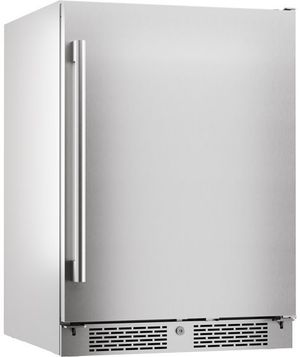
Zephyr Presrv™ 24” Stainless Steel Under the Counter Refrigerator
Shop Zephyr Presrv Under the Counter Refrigerator
Category: Under the Counter Refrigerators
Zephyr built the Presrv line around beverage and specialty storage, which makes this twenty-four inch unit a natural fit for a bar or entertaining space rather than a general-purpose kitchen box. The stainless front coordinates with an outdoor grill station or an indoor bar equally well, and the model code carries an OD suffix that typically indicates outdoor-rated construction, so confirm the exact configuration with our team if this one is headed for a covered patio. Best for homeowners building a dedicated bar or an outdoor entertaining area who want purpose-built beverage storage.
Top Features
- 24 inch width: The mainstream size class, with the most usable capacity available under a standard counter.
- Zephyr Presrv platform: A line developed specifically around beverage and specialty storage rather than adapted from a kitchen unit.
- Stainless steel construction: Durable and cleanable, suited to a bar or grilling station.
- Confirm the outdoor rating: The OD designation in the model code points to outdoor-rated build, worth verifying with our team before a patio installation.
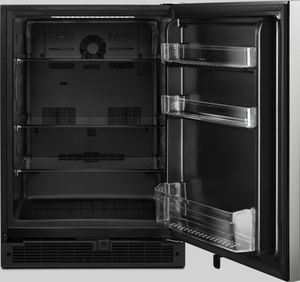
Whirlpool® 5.1 Cu. Ft. Fingerprint Resistant Stainless Steel Under the Counter Refrigerator
Shop Whirlpool Under the Counter Refrigerator
Category: Under the Counter Refrigerators
At 5.1 cubic feet, this is among the roomiest capacities in the undercounter class, which makes it a practical all-refrigerator for a kitchen island, a butler pantry, or a lunch-prep zone near the door. The fingerprint resistant stainless front is the right call for a unit at knee height where hands land constantly, especially in a household with kids grabbing their own drinks. Whirlpool parts and service support are broadly available, which matters on an appliance you expect to run continuously for a decade. Best for families adding practical cold storage to a busy kitchen.
Top Features
- 5.1 cubic feet of capacity: Near the top of the undercounter range, with room for produce, drinks, and lunch containers together.
- Fingerprint resistant stainless steel: Holds up visually at the height where children and guests actually touch it.
- Mainstream brand support: Widely available parts and service, backed by our own local service department.
- Kitchen-focused configuration: An all-refrigerator layout rather than a beverage-only interior.
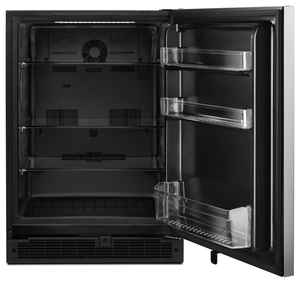
Whirlpool® 24” 5.1 Cu. Ft. Fingerprint Resistant Stainless Steel Under the Counter Refrigerator
Shop Whirlpool Under the Counter Refrigerator
Category: Under the Counter Refrigerators
This is the close sibling of the model above, matching it on the twenty-four inch width, the 5.1 cubic foot capacity, and the fingerprint resistant stainless finish while sitting at a different point in the Whirlpool series. Because the two are so similar on paper, the deciding factors are usually the interior configuration and the venting and installation details, so ask our appliance team to compare the two directly before ordering. Everything covered above about capacity and daily practicality applies here equally. Best for shoppers weighing two near-identical Whirlpool options who want the one that suits their cabinet opening.
Top Features
- 24 inch stated width: Explicitly sized for the standard twenty-four inch cabinet opening.
- 5.1 cubic feet of capacity: The same generous interior volume as its companion model.
- Fingerprint resistant stainless steel: A clean-looking front in a low, high-contact position.
- Series difference worth confirming: Have our team compare the interior layout and installation requirements against the companion model.
KitchenAid® 24” 5.0 Cu. Ft. Stainless Steel Undercounter Refrigerator
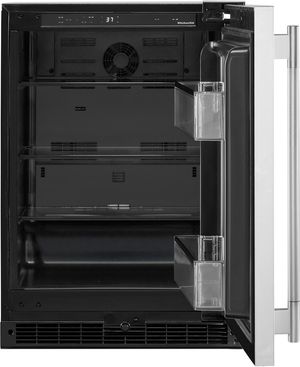
Shop KitchenAid Undercounter Refrigerator
Category: KitchenAid Packages
KitchenAid sits a step above the mainstream tier, and this five cubic foot undercounter unit is the sensible choice for a kitchen where the rest of the suite already wears the same badge. The twenty-four inch width and stainless front make it a direct fit for an island installation or a beverage station in a remodeled kitchen, and the capacity is close enough to the largest units in this group that you give up nothing meaningful in volume. Best for homeowners with an existing KitchenAid suite who want the second refrigerator to match rather than stand out.
Top Features
- 5.0 cubic feet of capacity: Full-size undercounter volume for produce, drinks, and prep items.
- 24 inch standard width: Drops into the most common cabinet opening in this category.
- KitchenAid suite coordination: Matches the finish and design language of a KitchenAid kitchen.
- Stainless steel front: A durable, neutral finish that works with any cabinet color.
Monogram® 24” 4.3 Cu. Ft. Stainless Steel Built-In or Freestanding Under The Counter Refrigerator

Shop Monogram Under The Counter Refrigerator
Category: Under the Counter Refrigerators
This is the unit that solves the built-in versus freestanding problem outright, because it is rated for both. That flexibility is genuinely valuable for anyone who is not certain yet whether the unit will end up flush inside cabinetry or standing at the end of a run, and it removes the single most costly mistake in this whole category. Monogram is the luxury tier of the GE Appliances family, so the build quality and the interior finish are a clear step up. Best for a high-end kitchen or bar remodel where the final cabinetry plan is still in motion.
Top Features
- Built-in or freestanding rated: Installs flush inside cabinetry or stands on its own, which removes the ventilation guesswork.
- 4.3 cubic feet of capacity: Practical volume for a bar, prep zone, or office in a 24 inch width.
- Monogram luxury tier: The premium end of the GE Appliances family, with the materials to match.
- Stainless steel finish: Professional-grade appearance in a run of high-end cabinetry.
Monogram® 5.4 Cu. Ft. Stainless Steel Under the Counter Refrigerator

Shop Monogram Under the Counter Refrigerator
Category: Under the Counter Refrigerators
At 5.4 cubic feet, this is the largest capacity in the entire group, which makes it the answer when the second refrigerator has to carry real weight rather than hold a case of drinks. In a butler pantry during the holidays, or in a pool house or in-law suite where it functions as the primary cold storage, that extra volume is the difference between one unit and two. Monogram construction and interior finish put it at the top of this lineup. Best for households that entertain seriously or need a compact unit to serve as a true primary refrigerator in a secondary space.
Top Features
- 5.4 cubic feet of capacity: The largest interior volume in this lineup, with room for full platters and tall containers.
- Monogram build quality: Premium materials and interior finish from the top tier of the GE Appliances family.
- Stainless steel exterior: A professional look that reads correctly in a high-end pantry or bar.
- Primary-refrigerator potential: Enough volume to serve a pool house, guest suite, or in-law setup on its own.
Monogram® 24” 4.3 Cu. Ft. Panel Ready Bar Refrigerator with Icemaker
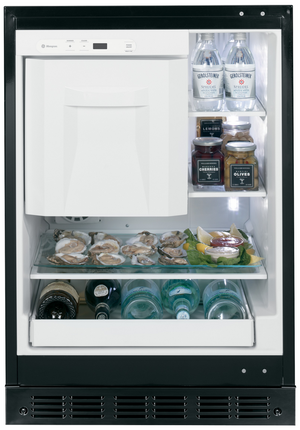
Shop Monogram Panel Ready Bar Refrigerator
Category: Refrigeration Panel Kits
This is the most complete bar solution in the group, because it combines refrigeration and an icemaker in one twenty-four inch cabinet, which means one opening instead of two. The panel-ready front accepts a custom cabinet panel, so the unit disappears entirely into the millwork of a wet bar, a butler pantry, or an office credenza. Plan for a water line to the cabinet, and have that run during construction rather than afterward. Best for a custom bar or a fully integrated kitchen where the appliance should be invisible.
Top Features
- Built-in icemaker: Refrigeration and ice in one cabinet opening, which completes a bar without a second appliance.
- Panel ready front: Accepts a custom cabinet panel so the unit blends completely into the surrounding millwork.
- 4.3 cubic feet of capacity: Sized for bottles, cans, and mixers alongside the ice compartment.
- Water line required: Plan the supply line and an accessible shutoff during the cabinetry stage.
Find the Perfect Under Counter Refrigerator for Your Space
Three decisions determine whether this project succeeds: matching the type to what you actually plan to store, confirming whether you need built-in front venting or a freestanding unit, and measuring the cabinet opening carefully from the finished floor. Get those right and almost any quality under counter refrigerator will serve you well for years. Get the ventilation one wrong and no brand will save it.
Bring us your measurements and your plan. Shop under counter refrigerators online at East Coast Appliance or visit a showroom in the Hampton Roads or Richmond area, where our staff can match a unit to your exact cabinet opening and use case, open the doors so you can compare interior layouts and finishes in person, and flag the hinge side before it becomes a problem. Our own crews handle professional installation including electrical and water line coordination, and our local service team is here after the sale. Big-box competitors leave fit and ventilation questions for you to discover after the box is already in the house. Stop in or contact our team for a fit recommendation.
Read more:
5 Best Mini Fridges You Want Immediately
5 Top Panel Ready Refrigerators to Customize Your Kitchen
Frequently Asked Questions about Under Counter Refrigerators
A built-in under counter refrigerator vents through a front grille at its base, so it can be installed flush inside cabinetry with no clearance on the sides or back. A freestanding unit releases heat from the sides or rear and requires open air around it, which means enclosing one in a cabinet causes poor cooling, higher energy use, and early compressor failure.
Units built for this application are typically around thirty-four inches tall so they align under a standard thirty-six inch counter, in widths of roughly fifteen, eighteen, or twenty-four inches. Measure the opening height from the finished floor including the toe kick, since the available height is what determines fit rather than the counter height itself.
A front-vented built-in model needs no side or rear clearance but requires its base grille to stay completely unobstructed by trim or flooring. A freestanding model needs the manufacturer’s specified clearance on the sides, back, and top, which is commonly a few inches, and it should never be installed in a closed cabinet.
Only an outdoor-rated under counter refrigerator belongs outdoors, even under a covered porch, because outdoor units add weather sealing, UV-resistant materials, and compressors rated for wider ambient temperatures. Installing an indoor unit outside generally voids the warranty and leads to early failure, which happens faster in a humid coastal climate.
A beverage center is optimized for cans and bottles, usually with a glass door and racking, and it typically runs warmer than food-safe refrigeration temperatures. A true all-refrigerator holds food-safe temperatures with adjustable shelving, so it is the correct choice for produce, dairy, and leftovers.
Many manufacturers recommend a dedicated circuit, particularly for built-in and icemaker-equipped models that run continuously, so check the installation specification for the model you choose. What is universal is that these units should be plugged into a properly placed grounded outlet rather than an extension cord or power strip.
Why Trust East Coast Appliance?
Locally owned and operated since 1988, East Coast Appliance is the largest independent appliance dealer in Virginia. We sell it ALL — from new name-brand appliances to scratch-and-dent appliances to our very own refurbished appliances. Aside from our huge selection of every major brand and everyday low prices, what sets us apart from our competitors is that we service what we sell and that we are locally owned and operated with factory-trained associates. And if you’re local, great news: East Coast Appliance is committed to providing the absolute lowest prices on the same available brand and model — simply bring in the ad of the local retail competitor while the lower price is in effect and you’ll receive your price match.
Shop The Latest Appliances at East Coast
There is a reason we are dubbed “The Discount King” — for unbeatable deals, shop laundry appliances online at East Coast Appliance. Our friendly associates are always happy to help you, whether you call us or use our online chat feature. Better yet, stop by one of our showrooms to see why we are the best appliance store in Virginia. Visit us today!