

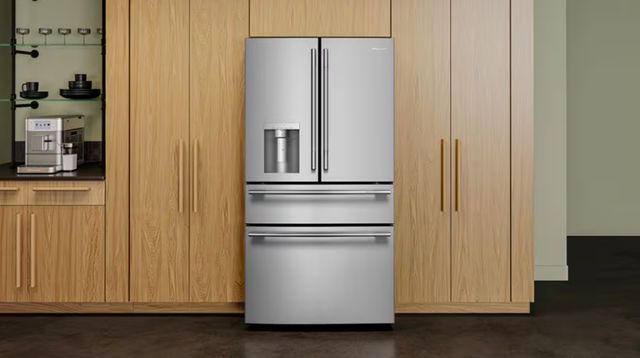
The cookout starts at noon, and it is already ten at night in a Virginia Beach kitchen where two sheet pans of marinating chicken are balanced on top of a gallon milk jug, the birthday cake is sitting out on the counter because it will not clear a single shelf, and a bag of store-bought ice is sweating in the sink because the built-in bin ran dry after the second round of drinks. Nothing is going in. Things are coming out to make room for other things. That is the night most households learn their refrigerator is too small for the way they actually cook and host, and it is the reason a greater refrigerator lands on the shopping list before a single guest arrives.
Find a Refrigerator That Fits Your Family and Your Kitchen
Our specialists size, deliver, and install large capacity refrigerators across Virginia and North Carolina every day. Compare French door, side-by-side, and multi door models with real capacity numbers in front of you.
Here is the encouraging part. Sizing up is a math problem with known answers, and East Coast Appliance has been solving it for Virginia and North Carolina families for years, from the measuring tape to the delivery truck to the water line hookup. This guide covers what actually qualifies as a greater refrigerator, how much capacity your household really needs, how the major configurations compare side by side, the storage features that matter for a big family and the ones that carry a party, the fit and clearance realities that decide whether a unit gets through your door, and what a larger cabinet honestly costs to run each year.
Key Takeaways
- The category starts near 25 cubic feet: Standard refrigerators land around 20 to 25 cubic feet, while a greater refrigerator generally begins at 25 and climbs past 30 in freestanding models.
- Plan 4 to 6 cubic feet per person: A family of five usually needs 25 to 30 cubic feet, and regular hosting adds another 2 to 4 on top of that for platters and beverages.
- Width does more than cubic feet: A 36-inch cabinet gives you full-width shelves that hold a half sheet pan, which a 33-inch side-by-side simply cannot do at any capacity rating.
- Measure the path, not just the opening: Cutout width, door swing, hallway turns, and stair landings decide whether a wide refrigerator reaches your kitchen at all.
Bigger Than Standard: How Large a Greater Refrigerator Really Is
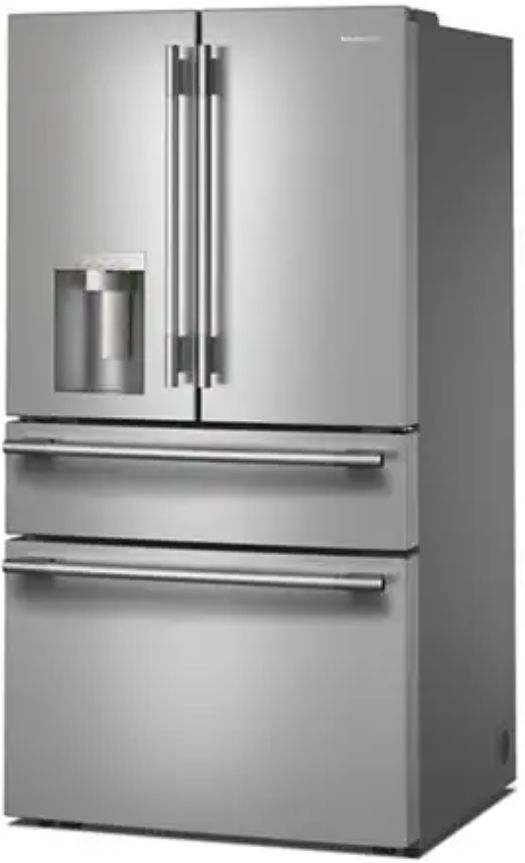
A greater refrigerator is a unit with roughly 25 cubic feet of total capacity or more, usually built on a 36-inch or wider cabinet. That is the short answer, and the numbers around it make it clearer.
Compact and apartment-sized units run about 10 to 18 cubic feet. Mainstream standard models sit around 20 to 25. Once you pass 25 and head toward 28, 30, or more in a freestanding model, you are shopping the large capacity refrigerator tier that this article is about.
Capacity and Width Are Two Different Decisions
Shoppers mix these up constantly. Capacity is volume measured in cubic feet. Width is the exterior dimension of the cabinet in inches. A wider cabinet is the most reliable path to more usable space, because width buys you shelf span that volume alone does not.
The width tiers you will actually find on a sales floor break down like this:
- 30 and 33 inches for tight kitchens and galley layouts.
- 36 inches, the dominant mainstream size and the sweet spot for most families.
- 42 and 48 inches for built-in installations and luxury remodels.
Height typically runs 66 to 80 inches. That upper end matters in older Hampton Roads and Richmond homes, where a tall unit can run straight into a soffit, a run of crown molding, or the bottom of an upper cabinet that was hung for a 66-inch refrigerator in 1985.
The Vocabulary the Rest of This Guide Uses
- Total capacity: the combined volume of the fresh food and freezer compartments.
- Fresh food capacity: the refrigerated section only.
- Freezer capacity: the frozen section only.
- Usable capacity: the space you can actually fill with food after shelving and hardware.
- Exterior width: the widest point of the cabinet itself.
- Cutout width: the opening in your cabinetry the unit has to slide into.
- Counter depth: a shallower cabinet, usually around 24 to 28 inches deep, that sits nearly flush with countertops.
- Standard depth: a deeper cabinet, roughly 31 to 36 inches, that projects past the counter.
Why Two 28 Cubic Foot Refrigerators Do Not Hold the Same Groceries
Here is the part most buying guides skip entirely. Advertised total capacity is measured as empty interior volume with the shelves removed. What you load is usable capacity, and the gap between the two varies a lot.
An in-door ice maker eats several cubic feet out of the fresh food side. Thick drawer walls and heavy plastic bin frames consume more. A layout with three narrow half-shelves holds far less real food than one with two full-width spans, even at identical ratings. When comparing two models on paper, look at shelf configuration and door bin depth before you trust the cubic-foot number on the sticker.
Read more:
How to Choose the Right Refrigerator Size
Standard Fridge Sizes, Dimensions, & Capacity Explained
Size It Right: Cubic Feet by Family Size and Hosting Habits
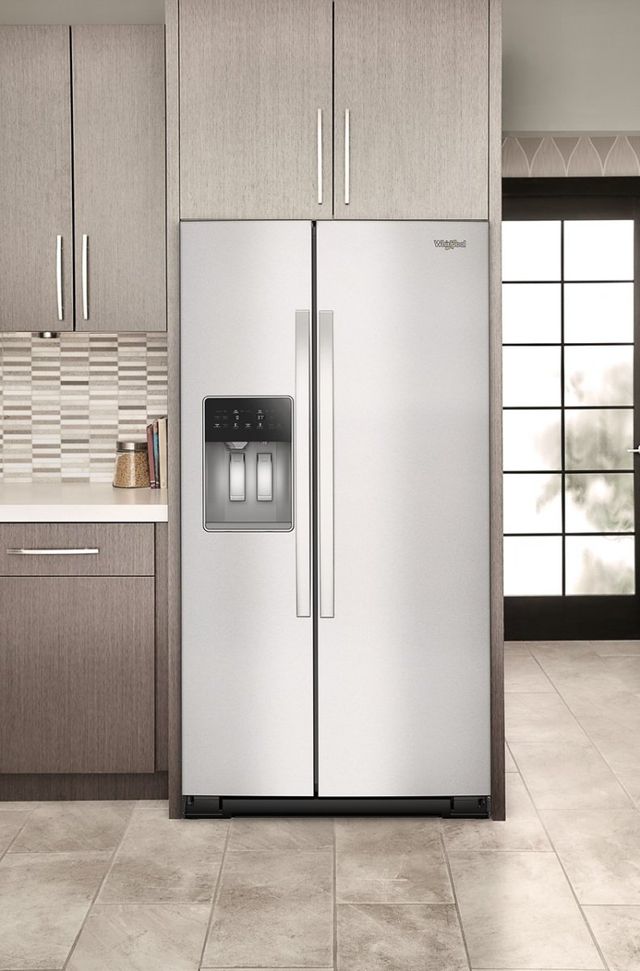
The industry rule of thumb is 4 to 6 cubic feet of refrigerator space per person in the household. Use the low end if you shop two or three times a week and the high end if you shop once and buy deep.
Translated into household sizes, that looks like this:
- A couple or single person: about 10 to 14 cubic feet.
- A family of three or four: roughly 18 to 22 cubic feet.
- A family of four to five: about 22 to 25 cubic feet.
- A household of five or more: 25 to 30 cubic feet or more.
The Adjustments That Push the Number Up
Most guides stop at the per-person math. Real kitchens do not work that neatly. Add capacity for any of these:
- Warehouse club shopping, where a single trip brings home a 12-pack of yogurt and a flat of eggs.
- Weekly meal prepping in stacked containers, which trades vertical space for convenience.
- Teenagers, who empty a fresh food compartment faster than any other variable in this list.
- Multigenerational households, where two cooks keep two sets of ingredients.
- Home-based food businesses and serious baking.
- Hosting more than once a month.
The Entertainer Allowance
If you host regularly, add 2 to 4 cubic feet beyond your household number. That extra volume goes to specific, awkward things: deli and vegetable platters that need to lie flat, half sheet pans of prepped appetizers, a case of beverages, and tall bottles that will not stand up under a fixed shelf.
Vertical clearance matters as much as volume. A standard layer cake in a bakery box needs about 10 to 12 inches of shelf height. A 20-pound turkey in a roasting pan needs roughly 14 inches, plus enough shelf width to slide in without tipping. Those two items alone rule out plenty of otherwise capable refrigerators.
A Five-Minute Audit Before You Shop
Run this on the unit you own now, and you will walk into a showroom knowing what you need instead of guessing.
- Count how many times in the last month you ran out of shelf space and left food on the counter or in a cooler.
- Note whether the freezer or the fresh food side fills up first, because that answers whether a convertible zone is worth paying for.
- Measure the tallest item you regularly store and compare it to your current shelf spacing.
- Check how many door bins are holding things sideways because they will not stand upright.
If the freezer is what overflows, a side-by-side or a flex-zone model solves more for you than raw fresh food volume does.
French Door, Multi Door, Side by Side, or Built In: Which Layout Wins
Configuration decides how your capacity is shaped, and shape is what you live with daily. This table compares the five layouts you will realistically choose between.
| Feature | French Door | Four Door Flex or Multi Door | Side by Side | Bottom Freezer | Built In or Column |
|---|---|---|---|---|---|
| Typical Capacity in Cubic Feet | 20 to 30 | 25 to 31 | 22 to 29 | 17 to 24 | 18 to 30 per cabinet |
| Common Widths | 30 to 36 inches | 36 inches | 33 to 36 inches | 24 to 33 inches | 24, 30, 36, 42, 48 inches |
| Typical Depth | 31 to 36 inches standard | 34 to 36 inches | 32 to 35 inches | 30 to 33 inches | 24 inches, flush with cabinetry |
| Counter Depth Capacity Trade-Off | Gives up 4 to 6 cubic feet | Gives up 3 to 5 cubic feet | Gives up 3 to 4 cubic feet | Gives up 2 to 4 cubic feet | Built flush by design |
| Fresh Food Access | Full cabinet width at eye level | Full width plus a middle drawer | Two tall narrow halves | Full width at waist height | Tallest full-width fresh section |
| Freezer Access and Organization | One or two pull-out lower drawers | Two lower drawers, one convertible | Full-height shelves and door bins | One deep lower drawer | Dedicated freezer column |
| Door Swing and Aisle Clearance Needed | Two narrow doors, about 33 inches of aisle | Two narrow doors, about 33 inches of aisle | Narrowest swing, about 30 inches of aisle | One wide door, about 42 inches of aisle | Two narrow doors per column |
| Best for Wide Platters and Sheet Pans | Yes, full-width shelves | Yes, the strongest option | No, shelves run under 15 inches wide | Yes, full width but lower down | Yes on 36 inches and wider |
| Best for Frozen Bulk Storage | Moderate, drawer stacking required | Good, two drawers to separate loads | Best, upright frozen shelving | Limited, one drawer to dig through | Best with a paired freezer column |
| Convertible or Flex Zone Availability | Common on mid and upper models | Standard on four door flex designs | Rare | Rare | Configured by column choice |
| Typical Price Tier | $1,500 to $3,500 | $2,500 to $4,500 | $1,000 to $2,200 | $900 to $1,800 | $6,000 and up per column |
| Installation Complexity | Freestanding plus a water line | Freestanding plus a water line | Simplest freestanding install | Simplest freestanding install | Cabinetry, panels, dedicated circuit |
| Best Suited Household | Families of four to six who host | Large households with changing needs | Freezer-heavy bulk shoppers | Couples and small families | Full remodels chasing maximum capacity |
Read the last row and the picture sorts itself out: French door and multi door layouts serve wide-platter storage and frequent hosting, side-by-side refrigerators serve deep frozen bulk storage, bottom freezer models serve smaller households on a budget, and built-in column pairs serve full remodels where maximum capacity outweighs cost.
One line on depth is worth repeating. A counter-depth unit of the same width typically surrenders several cubic feet compared with its standard-depth twin. You are buying a flush sightline with volume, which is a fair trade in an open kitchen and a poor one if you are already short on space.
Organization Upgrades Large Households Notice Every Single Day
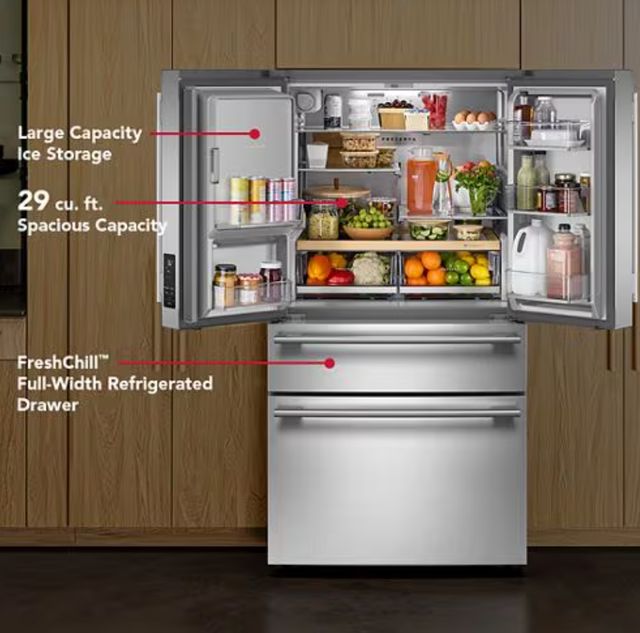
Capacity gets you in the door. Organization is what makes a big refrigerator feel big on a Tuesday night.
Shelving and Drawers
Adjustable and split shelving is the single most useful feature in a family refrigerator, because it lets you clear 14 inches of height for a stockpot one week and go back to standard spacing the next. Slide-under and flip-up shelves do the same job in one motion. A full-width pantry or deli drawer swallows lunch meats, cheese, and prepped snacks that otherwise scatter across three shelves. Humidity-controlled crispers keep greens usable for days longer, and gallon-size door bins mean a milk jug and a pitcher of tea both stand upright instead of lying on their sides.
Deep freezer baskets matter too. A freezer drawer without dividers becomes a pile, and a pile is where frozen food goes to be forgotten.
Ice, Water, and the Real Difference Between Setups
Ice is where large households get frustrated fastest. Placement drives the trade-off:
- An in-door dispenser keeps the ice system out of the freezer, preserving frozen storage volume and letting anyone grab ice without opening the main compartment.
- A second in-freezer maker roughly doubles daily output, which is what you want if your bin empties every single day.
Compare pounds of ice produced per day rather than the marketing name on the feature. A single factory maker often produces 3 to 4 pounds daily. A dual setup can reach 8 pounds or more.
Water features are worth the same scrutiny. A filtered dispenser cuts bottled water spending, an autofill pitcher refills itself so nobody has to remember, and hot-water or sparkling-water dispensers earn their place in households that go through gallons a day for tea, formula, or sports bottles.
Preservation Technology in Plain Language
Dual evaporators give the fresh food and freezer sections their own cooling loops, so freezer air never dries out your produce and onion smell never migrates into ice cream. Twin cooling systems on Samsung and comparable designs from LG, Whirlpool, and Maytag do the same job under different names. Air filtration cuts odor transfer. Preservation and soft-freeze drawers hold meat just below freezing so it stays sliceable without the texture damage of a hard freeze. For a family that buys protein in bulk, those systems are the difference between using what you bought and throwing out freezer-burned packages in March.
Smart Features, Honestly Rated
Door-in-door and view-through panels genuinely help when kids open the refrigerator eleven times an afternoon, because grabbing a juice box from an outer compartment loses far less cold air than swinging the main door wide. Temperature alerts and door-ajar notifications catch the mistakes that spoil an entire load. Interior cameras and inventory apps look impressive and get used far less than the brochure suggests.
If you are prioritizing, families most often regret skipping adjustable shelving, a full-width pantry drawer, and a second ice maker. They rarely miss the camera. Brands worth comparing across these features include KitchenAid, GE Profile, Café, Bosch, and Frigidaire alongside the names above.
From Craft Ice to Flex Zones: Features That Carry a Party
Hosting puts different demands on a refrigerator than daily cooking does, and almost no buying guide addresses them. You need to stage food ahead of time, chill drinks in volume, keep guests out of the main compartment, and produce enough ice for a crowd in July.
Convertible and Flex Zones
The benefit first: a convertible zone lets you turn freezer space into fresh food space exactly when you need it. Most flex compartments switch between refrigerator, freezer, soft freeze, meat, wine, and beverage settings from the control panel.
The hosting use case is specific. The day before a gathering, empty a freezer drawer, switch it to refrigerator mode, and you have gained a full-width shelf for platters and pans without displacing anything from the main compartment. After the party, switch it back.
Ice Is the Top Hosting Failure Point
A cookout for 20 people in a humid coastal August burns through ice faster than most people estimate, because drinks get topped off constantly and coolers melt down in the heat. Check three numbers before you buy:
- Pounds of ice produced per 24 hours, which is the only figure that predicts whether you keep up.
- Bin capacity, since a large bin buffers a slow maker during a party.
- Whether a second maker sits in the freezer, which is how you get from adequate to genuinely plentiful.
Specialty ice matters more than it sounds. Slow-melting round or craft ice keeps bourbon and cocktails from watering down, and it turns a drink station into something guests notice.
Beverage and Bottle Logistics
- A dedicated beverage center or drawer holds a case of drinks at the right temperature and keeps the traffic out of your food.
- Door-in-door access panels let guests grab a soda without opening the main door.
- Split and removable shelves clear the vertical room a wine bottle or a two-liter needs to stand upright.
- Adjustable gallon bins hold tall bottles without laying them down.
Platters, Trays, and Cake Boxes
This is where layout beats capacity. French door and multi door refrigerators put the full cabinet width in the fresh food section, so a half sheet pan slides straight in on a flat shelf. A side-by-side splits that same width into two narrow columns, which is why a 24.6 cubic foot side-by-side can feel smaller than a 22 cubic foot French door at party time. Measure the widest catering tray or cake box you use and compare it to the interior shelf span, not the exterior width.
Around Richmond and the Hampton Roads area, the calendar drives this. Summer cookouts, Thanksgiving, holiday parties, and fall game-day spreads all land in the same six months, and coastal humidity means ice demand runs higher here than the national average all summer long.
Greater Refrigerator Pros and Cons Families and Entertainers Should Weigh
Moving up in capacity solves real problems, and it creates a couple of new ones. Knowing both sides before you shop keeps you from paying for space you cannot install or skipping space you genuinely need.
Pros
Fewer grocery runs and better bulk value:
A 28 cubic foot cabinet holds a full warehouse club trip, which turns three midweek store visits into one weekend run and makes bulk pricing actually pay off.
Room to stage food ahead of a gathering:
Platters, marinades, and prepped sides can go in the day before instead of being assembled under pressure while guests are arriving.
Less spoilage and fewer forgotten leftovers:
Full-width drawers and adjustable shelving keep food visible instead of buried, and visible food gets eaten.
Zones that adapt through the year:
A convertible drawer runs as freezer space during bulk-buying months and as fresh food space during hosting season, so one cabinet covers both patterns.
Stronger kitchen appeal and resale value:
A wide statement refrigerator in a current finish reads as an updated kitchen to buyers, and appliance packages carry weight in listings across Virginia and North Carolina.
Cons
Higher purchase price:
Stepping from a 22 cubic foot standard model to a 28 cubic foot wide unit typically adds several hundred to a couple thousand dollars, and built-in columns multiply that.
Real space and clearance demands:
A wider cabinet needs a wider cutout, more aisle room for door swing against an island, and a delivery path that older homes do not always provide without removing doors.
Read more:
Counter Depth vs Standard Depth: Choosing the Right Refrigerator for Your Kitchen
French Door vs Side by Side: Choosing the Right Fridge
Make Sure It Fits Before It Arrives: The Measurements That Matter
Most refrigerator returns are fit problems, not performance problems. Twenty minutes with a tape measure prevents nearly all of them.
- Measure cutout width at the narrowest point of the opening, including any trim, backsplash tile, or baseboard that intrudes.
- Measure height from the finished floor to the lowest obstruction above, whether that is a cabinet bottom, a soffit, or molding.
- Measure depth from the back wall to the front edge of your countertop.
- Measure the door swing arc and the walkway or island clearance in front of the opening.
Take width and height in three places each and use the smallest number. Older Richmond and Hampton Roads homes have settled, and floors and openings are rarely square.
Clearance Rules in Actual Numbers
- Leave roughly 1 to 2 inches behind the unit for airflow across the condenser.
- Allow about a half inch on each side and above for ventilation and door clearance.
- Add extra side space when a hinge sits against a wall, because the door has to open past 90 degrees before crisper and freezer drawers will pull out for cleaning.
The Delivery Path Nobody Measures
This is the biggest gap in competing content, and it is the reason a delivery gets rescheduled. Walk the route the refrigerator has to travel and write down every number:
- Exterior doorway width, including the storm door.
- Interior door frame widths along the route.
- Hallway turns and whether a 36-inch box can pivot at the corner.
- Stair landings and railing positions.
- Tile thresholds and transition strips that change floor height.
- Whether refrigerator doors and handles must come off to clear the narrowest point, which is common with 36-inch and wider units.
Depth, Water, and Power
A standard-depth cabinet projects roughly 4 to 8 inches past a typical countertop. In a galley kitchen or a layout with a tight island, that projection is what blocks the walkway, and it is the main argument for counter depth even at the cost of a few cubic feet.
Locate the water line, the shutoff valve, and the outlet before you buy, not on delivery day. A recessed water box behind the unit is ideal because a surface-mounted valve and line can consume an inch or more of usable depth and push the whole cabinet forward.
Bring these numbers to an East Coast Appliance showroom and the conversation gets fast: cutout width, height to the lowest obstruction, depth to the counter edge, aisle width, narrowest doorway on the delivery path, and whether you have a working water line. Our delivery crews handle door and handle removal and reinstallation when the path calls for it.
What a Larger Refrigerator Really Costs to Run Each Year
The question every capacity shopper asks is whether a bigger box means a bigger power bill. The honest answer is that cabinet size matters less than the technology inside it.
Compare the annual kilowatt-hour figure on the yellow EnergyGuide label, not the cubic feet. Most modern large refrigerators land between roughly 550 and 800 kWh per year. At around 13 cents per kilowatt-hour, that is a difference of about $30 a year between an efficient large unit and a thirsty one, which is far less than most shoppers fear.
ENERGY STAR certification signals that a model uses meaningfully less energy than the federal minimum for its class. That certification is why a new 28 cubic foot refrigerator often draws less power than the 20 cubic foot unit it replaces, especially if the old one is ten years or older with a tired compressor and hardened gaskets.
Configuration and features shift the number in predictable ways:
- Through-the-door ice and water dispensers add consumption, and a dual ice maker adds more.
- Inverter and linear compressors cut usage by running at variable speed instead of cycling hard on and off.
- Better insulation and dual evaporators reduce the work needed to hold temperature.
- Side-by-side models tend to run slightly higher than comparable French door models because of the taller door seals and dispenser hardware.
One Big Refrigerator or Two Smaller Ones
Households often keep an aging second refrigerator in the garage rather than replacing the main unit. That old unit can pull 800 to 1,200 kWh per year by itself, which frequently costs more annually than the difference between a standard and a large modern cabinet. Consolidating into one efficient large refrigerator is usually the cheaper path, unless you genuinely need the overflow capacity discussed in the next section.
Longevity, Maintenance, and Service
Refrigerators last 10 to 15 years with basic attention. Vacuum the condenser coils every 6 to 12 months, replace the water filter on schedule, wipe and check door gaskets, and keep the unit level so doors seal and drawers track properly.
Here is the maintenance detail our service techs bring up most often: after installing a new water filter, run 2 to 4 gallons through the dispenser before you drink or make ice, because a fresh carbon filter sheds fine black particles on its first flush that will otherwise end up in your glass and cloud your ice.
Coastal air deserves a mention. In the Virginia Beach, Norfolk, and Chesapeake area, salt and humidity accelerate coil grime and gasket wear, so the coil and gasket routine matters more here than inland. Most refrigerators carry a one-year manufacturer warranty with extended sealed-system coverage on the compressor, and extended plans are available. The practical advantage of buying locally is that service comes from factory-trained techs in your area rather than a call center and a scheduling queue.
Overflow Storage: Garage Ready Units, Beverage Centers, and Freezers
Nearly every competing guide assumes the goal is maximum cubic feet in one cabinet. Sometimes the smarter build is a right-sized primary refrigerator plus dedicated overflow storage.
There are three overflow paths, and each suits a different problem:
- A garage-ready secondary refrigerator handles bulk beverages, holiday overflow, and the case of drinks you do not want in the kitchen.
- An undercounter beverage center or wine column serves entertainers who need drinks chilled and accessible without traffic in the main compartment.
- A standalone upright or chest freezer is the answer when frozen protein and warehouse-club shopping are the real bottleneck.
Garage ready is a real specification, not marketing. It means the unit is rated to keep cooling correctly across a wide ambient temperature range, often roughly 38 to 110 degrees Fahrenheit. That matters enormously in Virginia and North Carolina, where a garage drops below freezing in January and pushes past 100 in July. A standard indoor refrigerator placed in an unconditioned garage can stop cooling its freezer properly in cold weather, run constantly in summer heat, and fail years early.
The decision comes down to a few clear signals:
- Choose one large cabinet when your kitchen opening allows it and daily convenience is the priority.
- Add a second unit when hosting is seasonal, when the kitchen opening is fixed and narrow, or when freezer demand is the actual problem.
- Compare the economics honestly. A quality garage-ready refrigerator or a 24-inch beverage center generally runs $700 to $2,000 installed, while stepping up to a 42-inch or 48-inch built-in installation typically starts around $8,000 before cabinetry work. Two units often deliver more total capacity for less money, at the cost of floor space and a second appliance to maintain.
Our specialists can help plan a two-unit setup, including where the second unit goes, what electrical it needs, and how both pieces get delivered on the same trip.
How to Read a Spec Sheet in Platters Instead of Cubic Feet
Cubic feet describe a volume, and volume tells you almost nothing about whether Thanksgiving fits. A more useful method is to translate the spec sheet into the objects you actually store. Pull the interior shelf width and the adjustable shelf spacing from the manufacturer specification sheet, then check them against the four or five items that give you trouble every year. A 36-inch French door model usually offers about 30 to 32 inches of interior shelf span, which clears a half sheet pan lying flat with room to spare. A 36-inch side-by-side splits that same cabinet into fresh food shelves running roughly 13 to 15 inches wide, which will not take a sheet pan in any orientation. Same width, same footprint, completely different capability.
Take these measurements with you and check them against the spec sheet before you buy:
- Half sheet pan: 18 by 13 inches, needs 19 inches of shelf span on a flat shelf.
- Quarter sheet pan: 13 by 9 inches, fits most full-width shelves and some wide side-by-side shelves.
- Bakery cake box for an 8-inch layer cake: about 10 to 12 inches of vertical shelf clearance.
- 20-pound turkey in a roasting pan: roughly 14 inches of height and 18 inches of width.
- Standard deli platter: 16 inches across, needs a full-width shelf.
- Two-liter bottle: 13 inches tall, needs a gallon-rated door bin or a cleared shelf.
- Case of 12-ounce cans: 16 by 10 inches, best handled by a convertible drawer or beverage zone.
Read more:
Richmond's Most Popular Refrigerator Models
The Most Reliable Refrigerator Brands
Shop Large Capacity Refrigerators Built for Families and Hosting
The models below cover the two configurations that solve most family and hosting problems, in both mainstream and premium tiers. Every one is a 36-inch cabinet, which is the width where full-size platters and real family volume become possible. Compare them on shelf layout and ice capability, not just the cubic-foot rating.
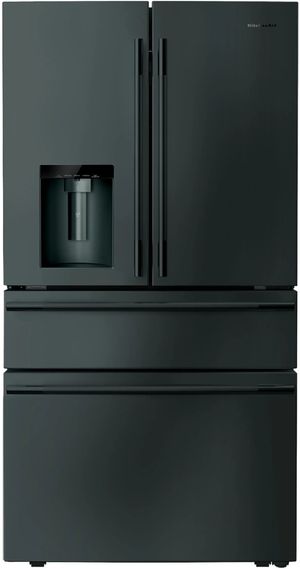
KitchenAid 36” 28.74 Cu. Ft. Juniper French Door Refrigerator with Exterior Water and Ice and FreshChill Full-Width Refrigerated Drawer
Shop French Door Refrigerators
At 28.74 cubic feet on a 36-inch standard-depth cabinet, this is the top of the family capacity range, and the Juniper finish makes it the visual anchor of an open-plan kitchen instead of another stainless rectangle. The deep green reads as cabinetry rather than appliance, which suits a great room where the refrigerator is always in view. The FreshChill full-width refrigerated drawer is the platter solution described earlier, giving you a dedicated span for sheet pans and trays the day before a party. Exterior water and ice keeps traffic out of the main compartment.
Top Features
- 28.74 cubic feet of total capacity: Lands at the top of the large capacity range, sized for households of five or more.
- FreshChill full-width refrigerated drawer: A dedicated cabinet-width drawer for platters, sheet pans, and party staging.
- Juniper finish: A colored statement finish that treats the refrigerator as part of the room’s design rather than hardware.
- Exterior water and ice dispenser: Guests and kids grab ice and water without opening the fresh food doors.
- French door layout on a 36-inch cabinet: Full-width shelving that accepts a half sheet pan lying flat.
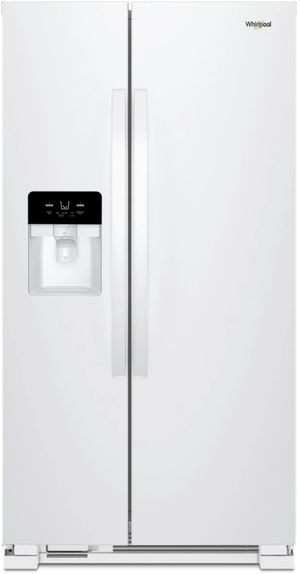
Whirlpool 36” 24.6 Cu. Ft. White Side-by-Side Refrigerator
Shop Side by Side Refrigerators
For the household whose freezer fills up before the fresh food side does, this 24.6 cubic foot side-by-side is the practical answer at a mainstream price. The 36-inch cabinet gives you a tall full-height freezer with upright shelving and door bins, so bulk protein and warehouse-club frozen goods stay visible instead of buried in a drawer pile. The narrow door swing is the smallest of any layout here, which matters in a galley kitchen or a tight island run. The white finish suits painted and traditional cabinetry.
Top Features
- 24.6 cubic feet of total capacity: Solid large-family volume in a mainstream price tier.
- Full-height freezer with upright shelving: The best layout in this lineup for frozen bulk storage and visibility.
- Narrow door swing: Needs roughly 30 inches of aisle clearance, the least of any configuration.
- White finish: Blends with painted cabinetry and classic kitchens without showing every smudge.
Whirlpool 36” 24.6 Cu. Ft. Monochromatic Stainless Steel Side-by-Side Refrigerator

Shop Side by Side Refrigerators
Same 24.6 cubic feet and same 36-inch footprint, finished in monochromatic stainless steel so it matches an existing stainless range, dishwasher, and microwave without a mismatched panel in the middle of the run. This is the version to choose when the rest of the kitchen is already stainless and consistency matters more than making a statement. The side-by-side layout still delivers the deep upright freezer that bulk shoppers need, and the tall narrow doors keep the swing tight in a busy work aisle with an island nearby.
Top Features
- Monochromatic stainless steel finish: Matches existing stainless appliances across a full kitchen suite.
- 24.6 cubic feet on a 36-inch cabinet: Large capacity storage without a wider cutout or a remodel.
- Side-by-side freezer shelving: Frozen items stay at eye level and organized rather than stacked in a drawer.
- Tight door swing in busy kitchens: Both doors clear an island aisle more easily than a single wide door.
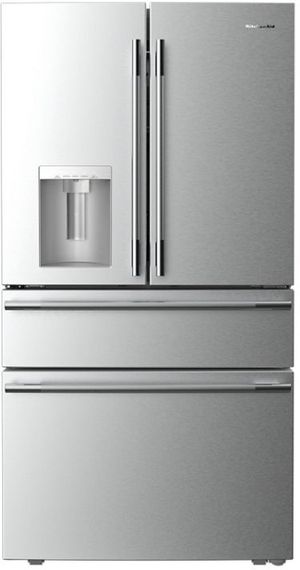
KitchenAid 36” 28.74 Cu. Ft. PrintShield Stainless Steel French Door Refrigerator with Exterior Water and Ice and FreshChill Full-Width Refrigerated Drawer
Shop French Door Refrigerators
This is the same 28.74 cubic foot French door platform in PrintShield Stainless Steel, and the finish is the reason to pick it. In a house where kids open the doors a dozen times an afternoon, the fingerprint-resistant coating means you are not wiping handles between school pickup and dinner. It also cleans up with water instead of specialty polish. You still get the FreshChill full-width drawer for platter staging and exterior water and ice for high-traffic access, on the 36-inch cabinet width that makes full-span shelving possible.
Top Features
- PrintShield Stainless Steel finish: Resists fingerprints and smudges in a kitchen where the doors get constant traffic.
- 28.74 cubic feet of total capacity: Enough volume for a household of five or more plus regular hosting.
- FreshChill full-width refrigerated drawer: Cabinet-width staging space for trays, platters, and prepped sides.
- Exterior water and ice: Keeps the main compartment closed and cold air in during a party.
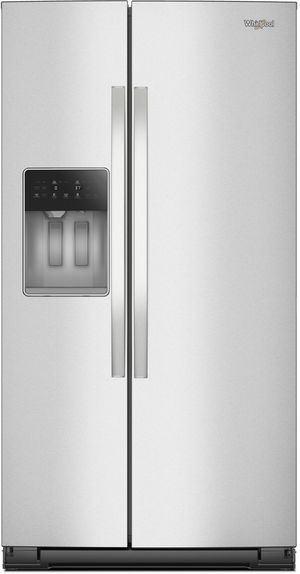
Whirlpool 36” 28.7 Cu. Ft. Fingerprint Resistant Stainless Steel Side-by-Side Refrigerator with TruCool System
Shop Side by Side Refrigerators
At 28.7 cubic feet, this is the largest side-by-side in the lineup and the pick for a household where frozen bulk storage is the real bottleneck. The extra four cubic feet over the standard side-by-side models above go into deeper shelves on both sides, and the TruCool system works to hold steady temperatures as doors open through a busy afternoon. Fingerprint-resistant stainless keeps it presentable in a high-traffic kitchen. Choose this one when your freezer overflows before your fresh food side does.
Top Features
- 28.7 cubic feet of total capacity: The largest side-by-side here, matching French door volume in a narrower swing.
- TruCool cooling system: Works to hold consistent temperatures through frequent door openings.
- Fingerprint resistant stainless steel: Stays clean-looking in a family kitchen without constant wiping.
- Deep full-height freezer: Upright frozen shelving for warehouse-club protein and holiday overflow.
Compare Greater Refrigerator Options at East Coast Appliance Today
A greater refrigerator starts near 25 cubic feet and usually rides on a 36-inch or wider cabinet, and the right size for your home comes from 4 to 6 cubic feet per person plus 2 to 4 more if you host regularly. From there, configuration decides whether a platter fits, features decide whether a party goes smoothly, and honest measurements of your cutout and delivery path decide whether the unit ever makes it into the kitchen.
Browse large capacity refrigerators online or stop into an East Coast Appliance showroom near Richmond, Virginia Beach, Chesapeake, Norfolk, or Newport News to open the doors, run a tape measure across the shelves, and see how a French door layout compares with a side-by-side in person. Our appliance specialists size these units every day, we offer same-day and next-day delivery availability, professional installation with door removal when the path demands it, price matching, and financing options. Most importantly, when something needs attention three years from now, our factory-trained service team is local. Big-box floors and online-only sellers cannot hand you a tape measure, walk your delivery path, or send a tech who lives in your area.
Frequently Asked Questions about Greater Refrigerators
A large family of five or more generally needs 25 to 30 cubic feet or more of total refrigerator capacity. That comes from the industry guideline of 4 to 6 cubic feet per person, and regular hosting or bulk shopping pushes the number toward the top of that range.
Freestanding refrigerators top out around 30 to 32 cubic feet, while built-in column pairs can be combined to exceed 40 cubic feet of total capacity. Column installations reach those figures by placing a separate refrigerator column and freezer column side by side in the cabinetry.
Yes, a 36-inch refrigerator in the 25 to 29 cubic foot range is typically the right size for a family of five. The layout matters as much as the rating, so a French door model with full-width shelves will hold more usable food than a side-by-side of identical capacity.
French door models generally hold more usable food because the fresh food compartment runs the full width of the cabinet and accepts wide platters and sheet pans. Side-by-side models win on frozen storage, since the full-height freezer offers upright shelving instead of a single deep drawer.
No, a modern large refrigerator does not use significantly more electricity, and an ENERGY STAR certified 28 cubic foot model often uses less than a 20 cubic foot unit from a decade ago. Compare the annual kilowatt-hour figure on the yellow EnergyGuide label rather than judging by cabinet size.
The most valuable hosting features are a convertible or flex zone, a dual ice maker with high daily output, full-width shelves or a refrigerated drawer for platters, and an exterior or door-in-door dispenser that keeps guests out of the main compartment. Those four together cover staging food ahead of time, chilling drinks in volume, and producing enough ice for a crowd.
Why Trust East Coast Appliance?
Locally owned and operated since 1988, East Coast Appliance is the largest independent appliance dealer in Virginia. We sell it ALL — from new name-brand appliances to scratch-and-dent appliances to our very own refurbished appliances. Aside from our huge selection of every major brand and everyday low prices, what sets us apart from our competitors is that we service what we sell and that we are locally owned and operated with factory-trained associates. And if you’re a local, great news: East Coast Appliance is committed to providing the absolute lowest prices on the same available brand and model — simply bring in the ad of the local retail competitor while the lower price is in effect, and you'll receive your price match.
Shop Greater Refrigeration at East Coast
There is a reason we are dubbed “The Discount King” — for unbeatable deals, shop refrigerators online at East Coast Appliance. Our friendly associates are always happy to help you find the best column refrigerator for your home, whether you call us or use our online chat feature. Better yet, stop by one of our showrooms to see why we are the best appliance store in Virginia. Visit us today!