

Last night's pasta looked great going into the fridge. This morning it came out of the microwave rubbery in the middle and crunchy at the edges, with a puddle of oil on the plate. The same thing happens to dinner rolls, grilled chicken and that leftover salmon nobody wants to eat twice. That gap between what food should taste like and what reheating does to it is exactly why so many home cooks start looking at a steam oven. It cooks and reheats with moist heat, so food stays tender instead of drying out.
The upside is that our appliance team at East Coast Appliance has already sorted out the confusing parts for you. This guide explains what a steam oven is, how the water and heat work together, and what you can cook in one. You will also find a side-by-side comparison with convection ovens and microwaves, installation and descaling advice, honest pros and cons, a simple way to decide if one is worth it, and our favorite models to shop today.
Key Takeaways
- A steam oven cooks with moist heat: Steam surrounds the food, so vegetables, fish and leftovers stay juicy instead of drying out.
- Combi models do double duty: Most combi steam ovens also work as a full convection oven, so you can roast, bake and brown in the same unit.
- Water source shapes installation: Reservoir models just need power, while plumbed models need a water line and sometimes a drain.
- Descaling is part of ownership: Mineral buildup from tap water means regular descaling, especially in homes with harder water.
Discover the Steam Oven That Fits Your Kitchen
Compare combi steam ovens from Miele, Thermador and Monogram with guidance from a local Hampton Roads team. East Coast Appliance handles delivery and professional installation from Virginia Beach to Newport News.
What Is a Steam Oven? A Simple Definition
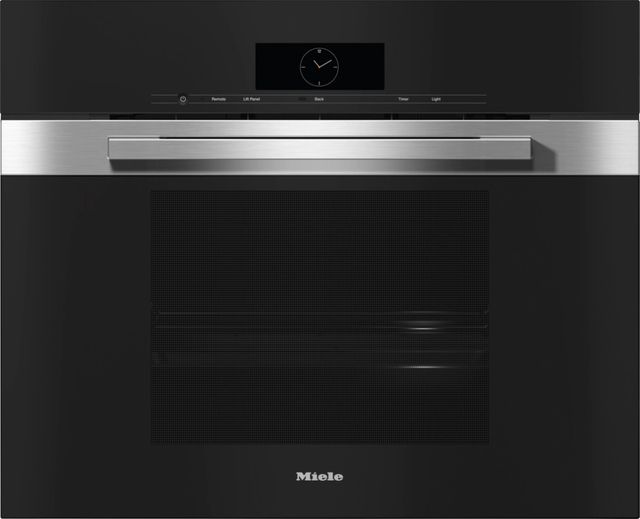
A steam oven is a wall or countertop oven that cooks food with hot water vapor instead of, or along with, dry heated air. The steam transfers heat quickly and gently, so food cooks evenly and holds on to its natural moisture.
Moist Heat vs Dry Heat
A regular oven uses dry heat. Hot air pulls moisture out of the surface of food, which is great for a crusty roast but tough on chicken breasts and leftovers. Moist heat works differently. Water vapor carries heat into food faster than dry air at the same temperature, and it keeps the surface from drying out.
The result is softer vegetables that still hold their color, fish that flakes instead of crumbles, and rice that turns out fluffy every time.
The Three Types You Will See
- Steam-only ovens: These cook with steam alone, usually up to about 212°F. They are great for vegetables, fish and grains but cannot brown or crisp.
- Combi steam ovens: These combine steam with convection heat. You can use steam alone, dry convection alone, or a mix of both for crisp outsides and juicy insides.
- Steam-assist ovens: These are mostly standard ovens or ranges that add a burst of steam during baking. They help with bread and roasts but do not offer full steam cooking.
Common Formats
- Built-in wall steam ovens: Installed in cabinetry, often stacked with a wall oven or warming drawer.
- 24-inch and 30-inch combi units: The two most common built-in widths, matched to standard cabinet sizes.
- Countertop steam ovens: Smaller plug-in units that sit on the counter, a lower-cost way to try steam cooking.
Here is something many guides bury. Most built-in combi steam ovens can work as a standalone convection oven with steam turned off. That means a combi model can serve as a second oven for holiday baking, not just a specialty tool.
How Does a Steam Oven Work?
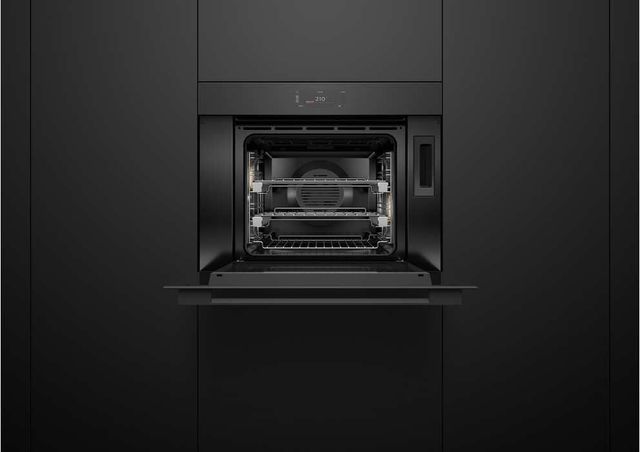
Every steam oven follows the same basic process. The differences between brands come down to where the water comes from and how precisely the oven controls humidity.
- Water goes in: Water comes from a removable reservoir or a plumbed water line.
- Water turns to steam: A steam generator or boiler heats the water and sends vapor into the oven cavity.
- Humidity fills the cavity: Sensors and controls hold the right level of moisture and temperature.
- Excess steam vents out: Extra moisture and condensation leave through a vent or collect in a tray so the cavity does not flood.
Plumbed vs Water Reservoir Models
A water reservoir model has a removable tank you fill at the sink. It needs no plumbing, so it fits almost any kitchen remodel and is easy to swap out later. The trade-off is refilling the tank for longer cooks and emptying it afterward.
A plumbed steam oven connects to a water line, and some also connect to a drain. It refills on its own, which suits heavy daily use. It does require a plumber during installation and planning ahead in the cabinet design.
Humidity Levels on Combi Models
Combi models let you set the steam level, often shown as a percentage. Higher-end units let you adjust moisture anywhere from 0% to 100% along with temperature.
- High humidity (80% to 100%): Vegetables, fish, dumplings and gentle reheating.
- Medium humidity (40% to 70%): Roast chicken, pork loin and casseroles that need moisture plus some browning.
- Low humidity (10% to 30%): Bread, pastries and roasts that need a crisp crust.
Higher-end models also add sous vide modes, dough proofing settings and timed steam injection for bread. These features turn the oven into a tool for slow, precise cooking that once required separate gadgets.
Read More: 3 Benefits of Cooking with a Steam Oven | The Bosch Steam Oven
What Can You Cook in a Steam Oven?
Almost anything you cook on the stove or in a regular oven can go into a combi steam oven. Some foods simply shine with steam.
Food Categories That Thrive With Steam
- Vegetables: Broccoli, green beans, carrots and potatoes cook evenly and keep their bright color.
- Fish and seafood: Salmon, cod and shrimp stay moist and tender with less risk of overcooking.
- Poultry: Combi mode keeps chicken juicy inside while the skin crisps up.
- Grains and rice: Rice, quinoa and couscous cook without scorching on the bottom of a pot.
- Bread and pastry: Steam at the start of baking helps crusty loaves rise and develop a shiny crust.
- Eggs and custards: Steamed eggs, crème brûlée and cheesecake set smoothly without cracking.
Reheating Leftovers and Day-Old Bread
Reheating may be the most underrated reason to own a steam oven. Moist heat warms food from the outside in without drying it out. Pasta, rice, pizza and roast meats come back tasting close to fresh.
Day-old bread gets a second life too. A few minutes of steam and heat revive a stale baguette or bakery rolls so the crust crackles again.
Batch Cooking Without Flavor Transfer
Steam cooking lets you cook several dishes on different racks at once. Fish on one level and vegetables on another will not swap flavors, which makes weeknight meals and holiday side dishes faster.
A Hampton Roads Seafood Favorite
Cooks around Hampton Roads have a real advantage here. A perforated steam pan handles a batch of Chesapeake Bay blue crabs dusted with Old Bay, a pile of shrimp, or Lynnhaven oysters that steam until their shells pop open. You get even cooking with less mess than a big pot boiling on the stove.
What Steam Alone Does Not Do Well
Pure steam cannot brown, crisp or caramelize. Steamed chicken skin stays pale and soft, and steamed potatoes will not get crunchy edges. Combi mode solves this by adding dry convection heat, so you get moisture inside and a golden finish outside.
Steam Oven Benefits for Health, Flavor and Convenience
A steam oven changes more than how food tastes. It also changes how you cook during a busy week.
Better Nutrient Retention
Boiling vegetables pulls water-soluble vitamins, like vitamin C and some B vitamins, into the cooking water that goes down the drain. Studies on vegetable cooking methods generally find that steaming keeps more of those nutrients because food never sits in water.
Less Added Fat, Juicier Proteins
Steam keeps food moist on its own, so you need less butter or oil to prevent sticking and drying. Chicken, pork and fish stay juicier because moisture loss slows down.
Faster Cooking in Combi Mode
Moist heat transfers energy quickly. In combi mode, many roasts and casseroles finish sooner than they would with dry heat alone.
Gentler Reheating Than a Microwave
A microwave heats unevenly and dries out edges. A steam oven reheats evenly and restores moisture, which makes leftovers worth eating.
Easier Cleanup
Steam loosens baked-on spills, and many models offer a steam-clean cycle or similar cleaning option. A quick wipe usually handles the rest.
Read More: Take on Meals with the Bosch Steam Convection Oven | Speed Oven vs Microwave Capabilities Explained
Steam Oven vs Convection Oven vs Microwave: Side-by-Side Comparison
Use this chart to see how each option fits your cooking style. Features vary by model, so check the product page before you buy.
| Option | Best Uses | Browning and Crisping | Reheating Quality | Water Source | Price Tier |
|---|---|---|---|---|---|
| Steam-only oven | Vegetables, fish, grains | None | Excellent | Reservoir or plumbed | Mid-range to premium |
| Combi steam oven | Nearly everything | Very good | Excellent | Reservoir or plumbed | Premium |
| Steam-assist range | Bread and roasts | Very good | Good | Small reservoir | Mid-range |
| Convection oven | Roasting and baking | Excellent | Fair, can dry food | None needed | Entry to premium |
| Microwave | Fast reheating | Poor | Fast but uneven | None needed | Entry |
The quick takeaway: a combi steam oven suits cooks who want one appliance for healthy everyday meals and better leftovers, a convection oven suits bakers and roasters, and a microwave suits speed above all.
Steam Oven Installation, Size and Kitchen Planning
A built-in steam oven needs a little more planning than a range. The good news is that it fits neatly into most kitchen remodels.
Wall Placement and Pairing
- Combi steam oven above a wall oven: A popular pairing that gives you a full-size oven plus a steam oven at eye level.
- Steam oven over a warming drawer: A compact stack that keeps finished dishes warm while the next course cooks.
- Side-by-side wall units: Two ovens next to each other work well in larger kitchens with wide cabinet runs.
Cutouts and Electrical Needs
Built-in steam ovens come in 24-inch and 30-inch widths, but the cutout size varies by brand and model height. Some compact units need a cutout under 18 inches tall, while full-height models need more than 25 inches. Most built-in combi models run on a dedicated 240-volt circuit, so check the amp rating on the spec sheet.
Water Line and Drain for Plumbed Models
Plumbed models need a cold water line with a shutoff valve, and some also need a drain connection. Plan this before cabinets go in, since adding plumbing to a finished wall costs more.
Hard Water Matters
Minerals in tap water leave scale inside the steam generator over time. Water hardness varies across Hampton Roads, from city water systems to private wells in parts of Chesapeake and Suffolk. Many homes here deal with mineral buildup on faucets and showerheads, and the same minerals collect inside a steam oven.
Our installers often suggest testing your water hardness with an inexpensive test strip before the oven arrives. Many models let you enter the hardness level in the settings menu, which sets the descaling reminder to match your actual water instead of a factory default.
For a remodel, professional measurement and installation keep the project on track. A pro will confirm the cutout, electrical and water needs before the oven ships.
Read More: Wall Ovens 101: 10 Best Wall Ovens + Buying Guide | Double Oven vs Single Oven: Pros & Cons
Steam Oven Maintenance: Cleaning and Descaling Tips
A steam oven is easy to keep clean, but it does need a routine. A few minutes a week protects the steam system for years.
Daily Habits
- Wipe the cavity and door seal with a soft cloth after cooking.
- Empty and dry the water reservoir so it does not hold standing water.
- Leave the door open a few minutes so the cavity dries.
- Empty the drip tray or condensate container on models that have one.
How Water Hardness Affects Descaling
Descaling removes mineral scale from the steam generator and water lines. Softer water means fewer descaling cycles, while harder water can mean descaling as often as every few weeks of regular use. Skipping it can reduce steam output and shorten the life of parts.
Weekly and Monthly Checklist
- Weekly: Wipe the interior, clean the drip tray, and check the reservoir for residue.
- Weekly: Run a quick steam-clean or drying cycle if your model offers one.
- Monthly: Inspect the door gasket for wear and clean it gently.
- Monthly: Descale when the oven prompts you, or on the schedule your manual suggests for your water hardness.
Every brand has its own descaling steps and approved products. Follow the owner's manual for your model to protect the warranty.
Steam Oven Pros and Cons
A steam oven brings real gains in flavor, health and convenience. It also asks for more space, more upfront cost and a little upkeep. Here is how the trade-offs stack up.
Pros
Juicier, more flavorful food
Moist heat keeps proteins tender and vegetables bright.
Better leftovers
Reheated pasta, rice and bread taste close to fresh.
Healthier cooking
Steaming keeps more nutrients than boiling and needs less added fat.
Two ovens in one
Combi models double as a full convection oven.
Multi-level cooking
Cook several dishes at once without flavor transfer.
Cons
Higher upfront cost
Built-in combi models sit in the premium price tier.
Smaller cavity
Many steam ovens hold less than a standard wall oven, which can limit large roasts.
Learning curve and upkeep
New settings take practice, and regular descaling is required.
Is a Steam Oven Worth It? How to Decide
A steam oven is worth it if you cook most days, reheat leftovers often, or want healthier meals without giving up flavor. It is less worth it if you rarely cook or do not have wall space for a built-in unit.
Who Gets the Most Value
- Health-focused cooks: Steaming makes it easy to cook vegetables and fish with little added fat.
- Frequent entertainers: Multi-rack cooking and gentle warming keep big meals on schedule.
- Bakers: Steam injection helps bread rise higher and build a better crust.
- Households that reheat often: Leftovers taste far better than they do from a microwave.
- Remodelers: A new kitchen is the easiest time to add a built-in steam oven.
Who May Not Need One
- Occasional cooks who mostly warm prepared foods.
- Shoppers on a tight budget who need a single main oven first.
- Kitchens without wall space or a spare cabinet opening.
Quick Decision Checklist
- Budget: Are you comfortable in the premium tier, or is a countertop model a better start?
- Cooking habits: Do you steam, roast or reheat several times a week?
- Kitchen space: Do you have a 24-inch or 30-inch opening, or room to create one?
- Water source: Do you prefer refilling a reservoir or paying for a plumbed hookup?
Seeing a steam oven run in person helps a lot. Visit a showroom to see the controls, open the door and look at the pan sizes before you decide.
Your First Week With a Steam Oven: A Starter Plan
Most steam oven owners say the learning curve is the hardest part, and few guides explain how to get past it. A short starter plan helps you learn each mode with simple foods, so the oven becomes a daily tool instead of an expensive cabinet.
- Day 1, reheat leftovers: Use the reheat or high-steam setting on pasta, rice or pizza to see the difference right away.
- Day 2, steam vegetables: Cook broccoli and carrots on separate racks to learn timing without browning.
- Day 3, cook fish: Steam salmon or shrimp at full humidity and note how little time it needs.
- Day 4, try combi mode: Roast chicken pieces with medium steam for juicy meat and crisp skin.
- Day 5, revive bread: Refresh day-old rolls with a short burst of steam and heat.
- Day 6, use a preset program: Let an automatic program choose the settings so you learn how the oven thinks.
- Day 7, clean and dry: Run the drying or cleaning cycle and empty the reservoir to build the habit.
Top Steam Ovens to Consider for Your Kitchen
These five models cover the most popular brands and sizes, from compact 24-inch combi units to roomy 30-inch steam ovens. Each one pairs steam with convection, so you get both gentle cooking and real browning. Our team at East Coast Appliance can help you match the right size and cutout to your kitchen.
Monogram® Statement Collection 30" Stainless Steel Steam Oven
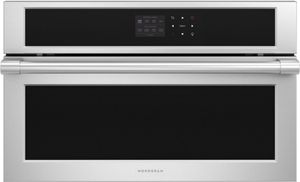
This Monogram steam oven brings luxury styling to healthy cooking, with edge-to-edge handles and polished, hand-finished stainless steel. It combines steam with True European convection, so you can steam, bake, broil and roast with steam at the same time.
Pre-programmed recipes cover vegetables, rice, grains, fish, shrimp, oysters and clams, which suits Hampton Roads seafood lovers. A recirculating water system makes the most of the removable tank for steady steam. It also includes a six-piece stainless pan set and a meat probe.
Top Features
- Steam and Convection Cooking: Combines moist heat with True European convection for flexible results.
- Pre-Programmed Recipes: Built-in settings for vegetables, grains, meats, fish and shellfish.
- Recirculating Water System: Maximizes water use for continuous steam throughout cooking.
- Six-Piece Pan Set: Stainless pans reheat several foods at once with less odor and flavor transfer.
- Temperature Probe: Tracks doneness so roasts finish right on time.
Miele 30" Graphite Grey Steam Oven

This Miele combi-steam oven gives you three appliances in one: a convection oven, a steam oven and Combi-Steam mode. In combi mode, you can set temperature from 85°F to 435°F and moisture from 0% to 100% for precise results.
A powerful external steam generator and two DualSteam inlets spread steam evenly through a 2.4 cubic foot cavity, big enough to cook menus for 8 to 10 people. The handleless Graphite Grey design hides the water container and wireless probe behind a lift-up control panel.
Top Features
- Combi-Steam XL: Steam, convection and combination cooking in one 30-inch unit.
- DualSteam Technology: Two steam inlets spread moisture evenly for consistent results.
- Adjustable Moisture: Set humidity from 0% to 100% in combi mode.
- Lift-Up Control Panel: Hides the water container, condensate container and wireless probe.
- Miele@home Connectivity: App control and Sabbath mode for added flexibility.
Thermador® Professional 30" Stainless Steel Steam Oven
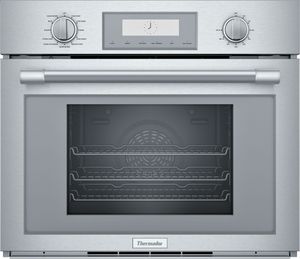
This Thermador Professional steam oven offers 2.8 cubic feet of capacity, which Thermador calls the largest 30-inch steam capacity on the market. It packs 17 heating modes and more than 50 automatic steam programs, from steam and steam convection to proofing, dehydrating and slow roasting.
A multi-point meat probe reads temperature from three points in real time. Home Connect Wi-Fi allows remote preheating, and Air Fry mode becomes available once the oven is connected. SoftClose hinges keep the door from slamming.
Top Features
- 17 Heating Modes: Steam, convection, roast, broil, proof, dehydrate and more in one oven.
- Large 2.8 Cu. Ft. Capacity: Room for multiple racks and bigger family meals.
- Multi-Point Meat Probe: Measures temperature from three points for accurate doneness.
- Home Connect Wi-Fi: Remote preheating and monitoring from your phone or voice assistant.
- Star-K Sabbath Mode: Certified settings for observance on the Sabbath and holidays.
Miele 24" Obsidian Black Steam Oven
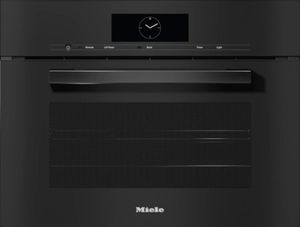
This 24-inch Miele Combi-Steam Oven XL fits smaller cabinet openings without giving up serious cooking power. Its 2.4 cubic foot stainless cavity handles whole chickens and large fish, while DualSteam technology keeps steam even from corner to corner.
The large M Touch display with MotionReact lights up as your hand approaches, so settings are easy to read. Combi-Steam mode gives you a crisp outside and a juicy inside, and the roast probe and menu cooking take the guesswork out of full meals. The Obsidian Black finish looks sleek in modern kitchens.
Top Features
- Compact 24-Inch Fit: Ideal for smaller kitchens or stacked wall oven designs.
- M Touch With MotionReact: A large touch display that responds as you approach.
- DualSteam Technology: Even steam distribution for consistent cooking.
- Roast Probe and Menu Cooking: Helps you time multi-dish meals with confidence.
- App Capable With Sabbath Mode: Smart control plus settings for religious observance.
Thermador® Masterpiece® 30" Stainless Steel Steam Oven
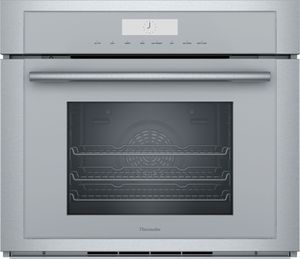
This Thermador Masterpiece steam oven delivers the same 2.8 cubic foot capacity and 17 heating modes as the Professional model, styled to match the Masterpiece collection. It is a strong pick if you want a sleek look across your wall ovens and cooktop.
True Convection with a third element bakes multiple sheet pans evenly, and the baffle system lets you cook several dishes at once without flavor transfer. Fast Preheat and Speed Convection save time on busy nights, while the self-clean cycle keeps upkeep simple.
Top Features
- Masterpiece Styling: Designed to coordinate with other Thermador Masterpiece appliances.
- True Convection System: A third element and baffle system cook multiple racks evenly.
- Speed Convection: Cooks frozen foods faster with no preheat needed.
- Fast Preheat: Gets the oven hot quickly for bake and roast modes.
- Air Fry Mode: Crispy results with less oil once connected to Wi-Fi.
Bring Home the Perfect Steam Oven for Healthier, Tastier Meals
A steam oven cooks with moist heat, so food stays tender, leftovers taste fresh and vegetables keep more of their nutrients. Combi models add convection for browning, making them a smart fit for daily cooks, bakers, entertainers and anyone planning a kitchen remodel.
When you are ready to choose, visit East Coast Appliance in Norfolk, Virginia Beach, Chesapeake or Newport News. Our appliance experts can walk you through each model, check your cutout and handle professional delivery and installation. As a locally owned Hampton Roads retailer since 1988, we also service what we sell, so you get local support long after the sale.
Frequently Asked Questions About Choosing a Steam Oven
A combi steam oven can replace a regular oven for most daily cooking because it also works as a convection oven. Many cooks still keep a full-size double wall oven or range for very large roasts and holiday baking.
A steam oven does not always need to be plumbed in, since many models use a removable water reservoir. Plumbed models refill automatically, which suits heavy use but requires a water line during installation.
A steam oven cooks with steam only, while a combi steam oven combines steam with convection heat. The combi model can brown and crisp food, which a steam-only oven cannot do.
You can bake bread in a combi steam oven, and steam at the start of baking helps the loaf rise and form a crisp, shiny crust. Steam-only ovens cannot reach baking temperatures, so they work for proofing dough rather than baking it.
Most steam ovens need descaling every few weeks to every few months, depending on use and water hardness. Follow the oven's reminder and your owner's manual, since harder water builds scale faster.
A steam oven is better than a microwave for reheating because it warms food evenly and restores moisture. A microwave is faster, but it often leaves food dry at the edges and cold in the middle.
Why Trust East Coast Appliance?
Locally owned and operated since 1988, East Coast Appliance is the largest independent appliance dealer in Virginia. We sell it ALL — from new name-brand appliances to scratch-and-dent appliances to our very own refurbished appliances. Aside from our huge selection of every major brand and everyday low prices, what sets us apart from our competitors is that we service what we sell and that we are locally owned and operated with factory-trained associates. And if you’re a local, great news: East Coast Appliance is committed to providing the absolute lowest prices on the same available brand and model — simply bring in the ad of the local retail competitor while the lower price is in effect and you'll receive your price match.
Shop The Best Appliance Deals at East Coast Norfolk
There is a reason we are dubbed “The Discount King” — for unbeatable deals, shop appliances online at East Coast Appliance. Our friendly associates are always happy to help you find the best appliances for your home, whether you call us or use our online chat feature. Better yet, stop by one of our showrooms to see why we are the best appliance store in Virginia. Visit us today!