


What size washing machine do you actually need? Start with two different measurements: the washer’s outside dimensions tell you whether it fits your home; its drum capacity tells you how much room you have for laundry. A bigger capacity does not always mean a wider machine.
The right fit depends on your available space, typical loads, and how often you wash. This guide walks through common washer sizes, practical capacity ranges, and the measurements to bring when you shop at East Coast Appliance.
At a Glance
Find the Right Washer for Your Home
Compare washer sizes, capacities, and styles to find a practical fit for your laundry routine.
Understanding Washer Sizes & Dimensions
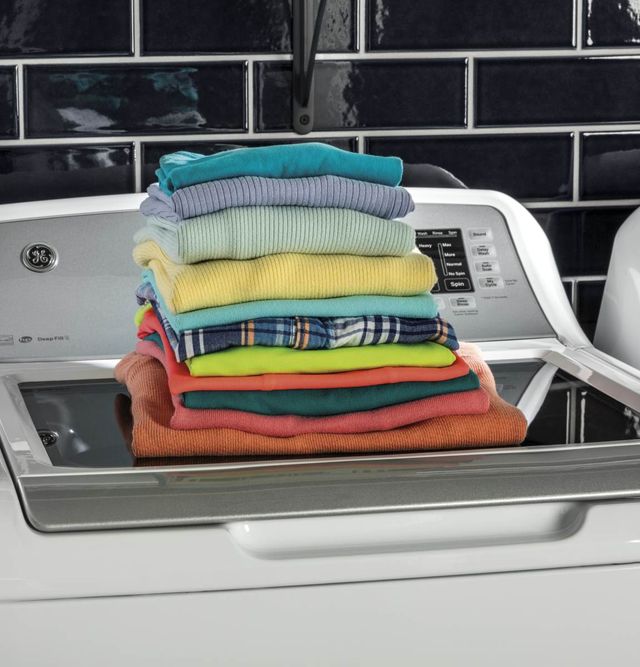
When comparing washing machine sizes, keep these measurements separate:
- Width, height, and depth: the exterior measurements, usually listed in inches. These help you check the laundry space and delivery route.
- Capacity: the volume of the wash drum, usually listed in cubic feet (cu. ft.) on U.S. product specifications. It is not the washer’s width or a guaranteed clothing weight.
Common Washing Machine Dimensions
For an initial comparison, Whirlpool’s sizing guide gives these approximate appliance dimensions, listed as width × height × depth:
- Compact washers: about 24 × 33–36 × 24–26 inches.
- Standard front-load washers: about 27 × 39 × 32–34 inches.
- Standard top-load washers: about 27 × 42–44 × 27–28 inches.
These are planning ranges, not required opening sizes. Individual models can fall outside them. Check the exact specification sheet and installation instructions for connections, door or lid clearance, ventilation, and any pedestal or stacking kit. A 27-inch-wide machine should not be assumed to fit a 27-inch-wide opening.
Capacity labels such as “small,” “large,” and “extra large” are shopping descriptions, not universal exterior-size standards. Compare the actual measurements rather than relying on the label.
Washer Product Showcase by Capacity

These models show how washer capacities and designs differ, from a portable machine to an extra-large front-loader. Use the examples to compare your needs, then explore the linked washer categories for current choices. Contact East Coast Appliance to confirm availability of a specific model.
Small Capacity: Bosch 300 Series 2.2 Cu. Ft. Front Load Washer
Model: WGA12400UC
This Bosch compact washer pairs a 2.2 cu. ft. drum with a body approximately 23½ inches wide, 33¼ inches high, and 24¼ inches deep. It is a useful example for shoppers comparing smaller laundry spaces and regular, separately sorted loads.
Its features include SpeedPerfect and an EcoSilence motor. Check the selected cycle’s loading guidance and the installation manual before planning an under-counter or stacked setup.
Compact Portable: Whirlpool 1.6 Cu. Ft. Top Load Washer
Model: WTW2000HW

This 1.6 cu. ft. impeller washer is approximately 21 inches wide, 37 inches high, and 23 inches deep. Its portable design uses casters so it can be rolled into position, and Whirlpool lists both a sink connection and permanent plumbing as installation options.
It uses a standard 120V electrical connection. Before choosing it for an apartment or another small space, confirm compatible water connections, drainage, storage space, and building rules.
Medium Capacity: Maytag 3.8 Cu. Ft. Top Load Washer
Model: MVWC465HW
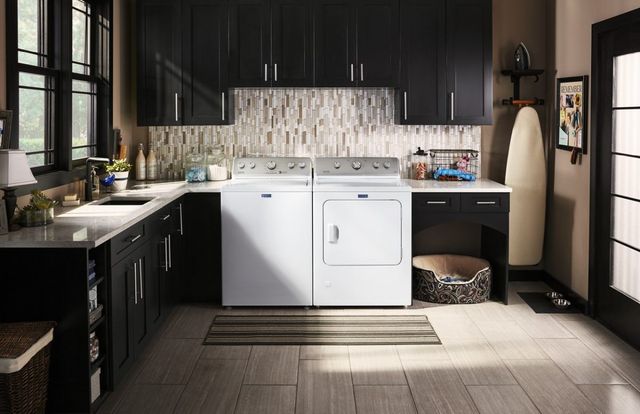
The Maytag MVWC465HW provides 3.8 cu. ft. of capacity in an agitator-style top-loader. Its body measures approximately 27½ inches wide, 40⅞ inches high, and 27 inches deep, with a listed height of 52 inches when the lid is open.
It includes 12 wash cycles, including Quick Wash and soak-cycle choices. The Auto Sensing option adjusts the water level; you still select the appropriate wash cycle for the load.
Large Capacity: GE 4.8 Cu. Ft. Smart Front Load Washer
Model: GFW650SPNSN

This GE model combines a 4.8 cu. ft. drum with dimensions of approximately 28 inches wide, 39¾ inches high, and 32 inches deep. Its features include SmartDispense detergent dispensing, built-in Wi-Fi, and the UltraFresh Vent System with OdorBlock.
Model status: GE states that the GFW650SPNSN is no longer being manufactured. It remains a useful size comparison, but its listing does not guarantee remaining stock. Ask our team about availability or compare current GE washer options.
Extra-Large Capacity: LG SIGNATURE 5.8 Cu. Ft. Front Load Washer
Model: WM9500HKA

The LG SIGNATURE WM9500HKA offers a 5.8 cu. ft. drum, providing an extra-large-capacity example for shoppers comparing bigger loads. LG lists a black stainless steel finish, TurboWash technology, ThinQ connectivity, and an integrated control panel.
Check the exact model’s installation specifications before planning its location. Extra drum space can be useful for bulky washable items, but the bedding care label and washer’s loading limits still determine what fits safely.
Washer Capacity Guide
Use these capacity bands as a starting point, adapted from Whirlpool’s washer capacity guide. Household size is only a rough guide; bedding, uniforms, workout clothes, and wash frequency can change what works for you.
Small Capacity: About 1.5–3.4 Cu. Ft.
A useful starting point for one or two people who wash smaller loads regularly. If floor space is the priority, compare compact washers, then check each model’s exterior dimensions. Small capacity alone does not guarantee a compact footprint.
Medium Capacity: About 3.5–4.4 Cu. Ft.
A practical range to compare for two or three people with routine laundry needs. It may also suit a larger household that prefers frequent, separately sorted loads.
Large Capacity: About 4.5 Cu. Ft. and Up
Worth considering for three or more people, frequent large loads, or bulky washable items. Models above 5.0 cu. ft. offer additional drum room, but still need individual fit checks. More capacity does not guarantee that every comforter will fit.
Browse all washers to compare capacity and dimensions together. Avoid choosing by cubic feet alone.
Choosing the Right Washer Size & Capacity
Think about a normal laundry week before choosing your next machine. A household that washes every day has different needs from one that saves most loads for the weekend.
- Look at the loads you already wash. Note which loads need splitting and which use only a small part of your current drum. If your current washer works well for your routine, its listed capacity is a useful comparison point.
- Identify your largest washable item. A bulky blanket can take up more room than a load of lightweight clothing. Check its care label before making it the reason to buy a bigger washer.
- Keep sorting habits in mind. More drum space will not combine items that need different temperatures or care cycles. Buy for the loads you can actually wash together.
- Try the loading position. At the showroom, check whether you can reach the bottom of a top-load tub or comfortably access a front-load door.
- Consider the dryer too. Check its load recommendations and installed dimensions. A washer upgrade is less convenient if every wet load needs to be split for drying.
For a family of four: compare large-capacity options, then adjust for your actual routine. Frequent sports laundry or bulky bedding may justify extra room; smaller, regularly sorted loads may make a more modest capacity practical. There is no single required size for every four-person household.
→ Learn More: The Best Washer and Dryer Brands for Every Home and Budget
How to Measure Your Laundry Space
Bring a few measurements and photos of your hookups when you visit us. Use the selected washer’s installation manual to turn these measurements into a fit check:
- Measure the opening: record the usable width, depth, and height, including the narrowest points around trim, counters, or shelving.
- Allow for connections: water hoses, drain connections, outlets, and any paired dryer vent need room. Follow the model’s rear and side clearance requirements rather than a universal allowance.
- Check open-door or open-lid dimensions: make sure doors, cabinets, and shelves will not block loading. Leave comfortable working space in front.
- Check the complete setup: include a pedestal, compatible stacking kit, dryer, and any closet ventilation required by the installation instructions.
- Measure the delivery path: check doorways, hallways, stairs, and tight turns. Ask about delivery access before ordering if any part of the route is close.
The appliance dimensions are only one part of the installation. Confirm the floor, water supply, drain, and electrical requirements with your installer, especially if you are changing the laundry layout.
Washer Capacity & Load Size
A cubic-foot rating measures drum volume. It does not translate to one reliable number of pounds, towels, or outfits for every washer. Fabric thickness, item size, and the cycle you choose all affect the appropriate load.
Follow your washer’s loading instructions and cycle limits. Place items loosely rather than compressing them to use every inch of the drum. If a load needs forcing into the machine, split it instead of treating the capacity rating as permission to overfill.
What Size Washer Do You Need for a King Comforter?
Start with the comforter’s care label, then check the washer manufacturer’s bedding guidance. GE explains that a comforter’s thickness, density, and overall size affect whether it fits. A thin king comforter and a thick one can need very different amounts of space.
Choose a machine that allows the item to fit loosely within the manufacturer’s loading limits. If your bedding is too bulky or its care label rules out machine washing, use the cleaning method the label recommends. No single capacity guarantees that every king-size comforter can be washed at home.
Top Load, Front Load & Stacked Washers
Top-Load Washers
Top-load washers need room above the machine for the lid and comfortable access to the tub. Compare capacity, tub reach, and the model’s agitator or impeller design rather than assuming every top-loader holds more.
Front-Load Washers
Front-load washers need door-opening clearance in front. Many offer stacking options, and some accept pedestals; confirm compatibility before planning either setup. ENERGY STAR highlights the water and energy advantages of certified front-load models. Compare each model’s EnergyGuide label for a more useful operating-cost estimate than drum size alone.
Stacked Laundry and Portable Washers
Stacking a compatible front-load pair can save floor width, but you still need adequate height, depth, access, and ventilation. Use the manufacturer-approved kit, with the dryer above the washer, and verify that you can reach the controls. Samsung’s stacking guidance emphasizes checking both appliance manuals for space and compatibility.
A one-piece laundry center is a different product from two separately stackable machines. Compare laundry centers using the complete unit’s dimensions.
Portable washers may be useful where a permanent setup is impractical. Check the specific model’s faucet or water connection, drainage, electrical requirements, storage space, and any building restrictions before buying.
Frequently Asked Questions about Washer Sizes
Many full-size washers are about 27 inches wide, while compact models are often about 24 inches wide. Exact widths and required installation clearances vary, so check the model specifications and manual before deciding whether a washer will fit.
A 4.5 cu. ft. washer is a reasonable starting point to compare, but the right capacity depends on wash frequency, clothing volume, and bulky items. Use your current loads as a reference rather than household size alone.
Not necessarily. Washers with different drum capacities can share similar exterior dimensions. Compare width, height, and depth separately from cubic feet, and include the installation space required by the manufacturer.
It depends on the comforter’s thickness, size, care label, and the washer’s loading limits. It must fit loosely; do not force it into the drum. A larger capacity can help, but no cubic-foot rating guarantees a fit for every king comforter.
No. Stack only a manufacturer-approved compatible pair using the specified kit, with the dryer above the washer. Check the manuals for installed height, clearance, ventilation, and access to controls and connections.
Capacity alone does not determine operating cost. Efficiency, cycle choices, water heating, and how often you wash all matter. Compare EnergyGuide labels and choose a capacity that suits your routine without overloading the machine.
Explore Different Washer Sizes at East Coast Appliance
Ready to narrow your options? Bring your laundry-space measurements, your current washer’s model number if available, and a description of your usual loads. Our team can help you compare capacities, check loading comfort, and review model-specific installation information.
Explore our washer selection online or visit one of our showrooms to find a washer that fits your home and routine.
Why Trust East Coast Appliance?
Locally owned and operated since 1988, East Coast Appliance is the largest independent appliance dealer in Virginia. We sell it ALL — from new name-brand appliances to scratch-and-dent appliances to our refurbished ones. Aside from our huge selection of every major brand and everyday low prices, what sets us apart from our competitors is that we service what we sell and that we are locally owned and operated with factory-trained associates. And if you’re local, great news: East Coast Appliance is committed to providing the absolute lowest prices on the same available brand and model —bring in the ad of the local retail competitor while the lower price is in effect, and you'll receive your price match.
Shop Washing Machines at East Coast
There is a reason we are dubbed “The Discount King” — for unbeatable deals, shop laundry online at East Coast Appliance. Our friendly associates are always happy to help you find the best washer for your home, whether you call us or use our online chat feature. Better yet, stop by one of our showrooms to see why we are the best appliance store in Virginia. Visit us today!