

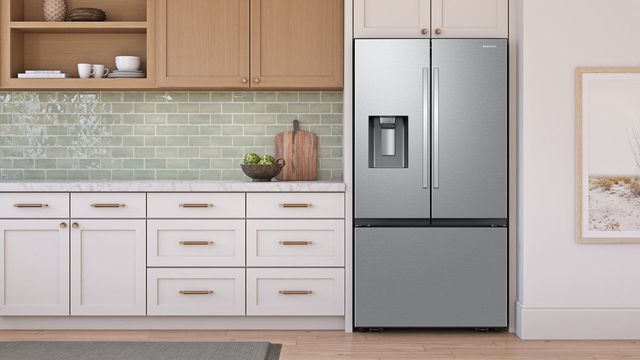
The cart is already full, the checkout line is six deep, and the only question that matters is whether there is still milk in the refrigerator door at home. Nobody answers the text. Back in the kitchen an hour later, the oven that was supposed to preheat at 5:30 is sitting cold because the timer lived on a phone that went into a pocket, and three separate manufacturer apps sit on the home screen doing three separate jobs badly. That gap between what a kitchen knows and what you know is exactly where Samsung appliances start to make sense, because the whole line is built to report to one place instead of four.
Build a Connected Kitchen That Actually Works Together
East Coast Appliance carries the full Samsung kitchen and laundry lineup across Hampton Roads and the Richmond area, with finishes and panel options you can see in person. Our team handles delivery, professional installation, and service after the sale from our own local crews.
Here is the good news buried in that scenario: the fix is a purchasing decision, not a technology project. At East Coast Appliance, our specialists set up connected kitchens for families from Virginia Beach and Norfolk to Chesterfield and Short Pump, so we know which features get used every week and which get switched off by March. This guide covers what a connected kitchen actually is, how Samsung appliances link through SmartThings, which categories gain the most, what the current AI features really do, how the connectivity tiers compare, the design and customization side, and how to plan a build in the right order.
Key Takeaways
- Connected is not the same as Wi-Fi enabled: A Wi-Fi appliance talks to its own app, while a connected kitchen shares status and routines through one hub, and that difference decides how much you actually use the features.
- SmartThings is the reason to stay in one family: One app covering the refrigerator, range, microwave, dishwasher, and washer removes the four-app problem that makes most smart kitchens quietly go dormant.
- AI features vary by model year and series: Bespoke AI models carry the interior cameras, screens, and energy tools, while core Wi-Fi models cover remote start and alerts without the extras.
- Network planning comes before appliance shopping: A weak 2.4 GHz signal at the back wall of a kitchen will sink an otherwise excellent smart appliance, and it is the easiest thing to check in advance.
What Makes a Kitchen Truly Connected
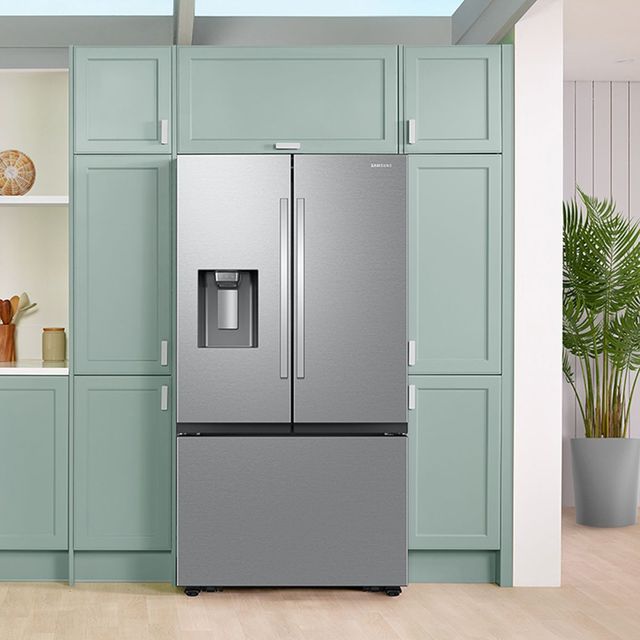
A connected kitchen is not a room full of appliances that each happen to have a radio inside. It is a group of appliances that share status, schedules, and data through a single hub, so the information shows up in one place and the machines can react to each other. Most kitchens sold as smart never reach that second stage.
The distinction is worth spelling out clearly, because shopping copy blurs it constantly. There are really three tiers.
- Wi-Fi enabled: The appliance can join your home network. That is the whole claim. It may do very little with the connection beyond reporting that it is on.
- App controlled: The appliance has a real app with remote start, monitoring, and alerts. Useful, but each brand comes with its own app, its own login, and its own notification style.
- Ecosystem integrated: The appliance joins a shared platform with everything else, so one app runs the room, devices can trigger each other, and voice control and automations work across categories.
The capabilities most households expect once they reach that third tier are consistent: remote start and monitoring, cycle and preheat notifications, error and diagnostic alerts, filter and consumable reminders, some visibility into energy use, and voice control through a speaker or a screen. The names that matter here are SmartThings, Matter, Wi-Fi, Bluetooth, the major voice assistants, and home energy monitoring.
Single-brand alignment is the practical shortcut. Four brands means four apps, four notification systems, and four sets of credentials that somebody in the house will forget. One family means one place to look, and it is the single biggest reason connected features survive past the first season.
How Samsung Appliances Connect Through SmartThings
SmartThings is the control layer that ties the lineup together. Rather than a refrigerator app, a range app, and a laundry app, one application holds every appliance in the house, grouped by room, with a common set of notifications and routines. That consolidation is the practical argument for buying Samsung appliances as a group rather than one at a time from different makers.
Connecting an appliance is straightforward at a high level. The machine joins your home network, you pair it in the app, you assign it to a room, and then you set whatever routines you want. Expect the whole process to take a few minutes per appliance, not an afternoon, provided the network reaches the spot where the appliance sits.
The Network Realities Nobody Mentions in the Store
Most smart appliance frustration is really network frustration. A few facts save a lot of trouble:
- Home appliances generally join the 2.4 GHz band rather than 5 GHz, because 2.4 GHz travels farther through walls even though it is slower.
- A kitchen is a difficult radio environment. Stainless steel panels, a metal-cased microwave, and appliance cabinetry all absorb and reflect signal.
- Mesh systems help a great deal in longer homes, especially older brick houses in the Fan or in Ghent where the router usually lives in a front room.
- When the internet goes down, the appliances keep cooking, washing, and cooling normally. You lose remote control and notifications, not the machine.
Routines Are Where the Payoff Lives
A routine is a rule that connects two things that used to be separate. A washer finishing its cycle can push a notification to the refrigerator screen so the person in the kitchen sees it. A range hood can respond to cooktop activity instead of waiting for someone to reach up and press a button. An oven can send a preheat-complete alert to a phone in the backyard.
Voice assistant compatibility is broad across the line, and Matter support continues to widen what talks to what across brands. Neither one replaces the value of having your primary appliances under one roof in one app.
Samsung Kitchen Categories That Benefit Most From Connectivity
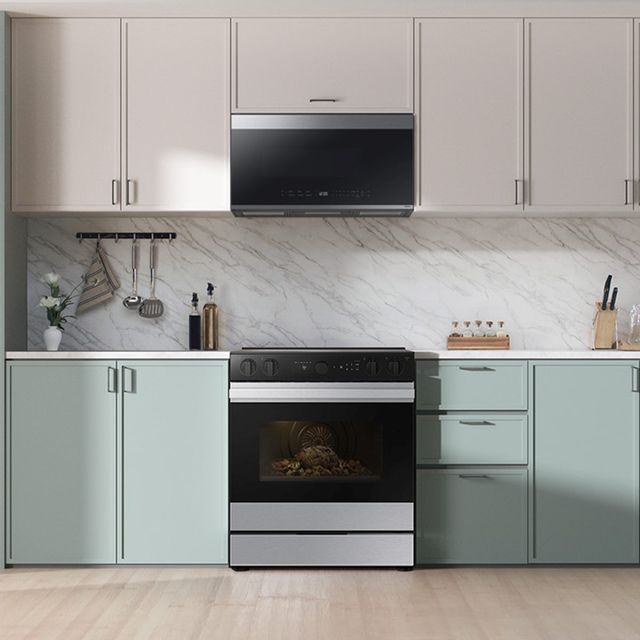
Connectivity pays off unevenly. Some categories gain a genuinely different daily experience, and others gain a convenience you will use twice a month.
Read more:
Samsung Bespoke Refrigerator: Customize Kitchen Colors
6 Top-Rated Samsung Electric Range Models
Refrigerators
This is the anchor. Family Hub screens turn the refrigerator door into the household message board and the place where every other appliance reports in. Internal cameras and AI vision can recognize items and help track what is running low, expiration tracking cuts down on the forgotten container in the back, and shopping lists build themselves as you go. Temperature alerts matter most on the day the power flickers and nobody is home.
Ranges, Cooktops, and Wall Ovens
Remote preheat is the feature people actually use, because it moves the twelve minutes of warm-up into the drive home. Guided cooking walks less confident cooks through unfamiliar dishes, camera-in-oven monitoring lets you check a roast without opening the door and dropping the temperature, and air fry and steam modes reduce the countertop clutter. Automatic cook time adjustments matter most for baking, where a few minutes decides the outcome.
Dishwashers
Cycle notifications, delayed remote start, leak alerts, and rinse aid reminders. The delayed start is the sleeper feature for anyone on a time-of-use electric plan, since it lets the machine run overnight without anyone staying up for it.
Microwaves and Hoods
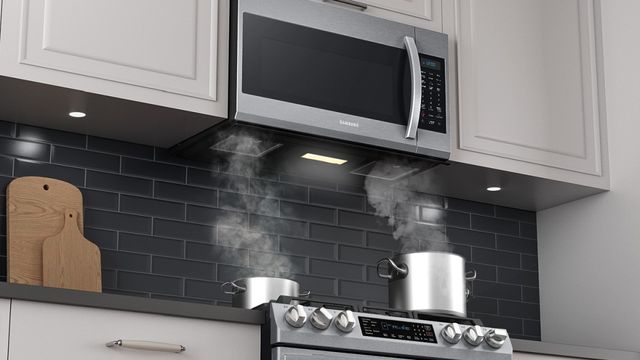
Over the range microwaves do double duty as ventilation, and connected models can link timer functions to the rest of the kitchen and coordinate ventilation with cooktop use. Automatic ventilation that responds to heat and steam beats the version where somebody remembers to hit the fan button after the pan is already smoking.
AI Features Redefining Samsung Appliances in 2026
The AI conversation around Samsung appliances has moved past marketing and into a set of specific, testable capabilities. Being clear about which is which protects your budget.
What AI Actually Does Day to Day
- AI Vision Inside: Interior cameras identify groceries as they go in and out, which supports inventory tracking and expiration reminders without manual entry.
- Recipe suggestions from what you have: Samsung Food integration builds meal ideas around the items already recognized in the refrigerator, which is genuinely useful on a Wednesday night.
- AI Home panels: Touchscreen panels on ranges and dishwashers put controls, timers, and household notifications where you are already standing.
- AI energy modes: Usage insights and automatic efficiency adjustments help households manage peak-rate electricity, which matters more each year in Virginia.
Self-Diagnostics and Faster Service
The quieter AI benefit is maintenance. Connected self-diagnostics let an appliance report an error code before a technician is dispatched, which shortens the guessing phase of a repair and often changes what parts arrive on the first visit. For a household without a spare refrigerator, that is worth more than any recipe feature.
Be realistic about availability. AI features vary by model year and series, and plenty of excellent Samsung appliances have solid Wi-Fi and no camera at all. Interior cameras and full AI Home panels concentrate in the Bespoke AI flagship models. If the feature is the reason you are buying, confirm it on the specific model rather than on the badge.
Design and Customization Advantages of Samsung Appliances
Connectivity alone does not sell a kitchen suite. The design side is what most shoppers decide on once they are standing in front of the machines.
Bespoke customization is built around interchangeable panels. Finishes include stainless, matte black steel, white glass, and navy steel, and the panels can be swapped later without replacing the appliance underneath. That matters for a homeowner who expects to repaint or re-tile before the refrigerator wears out.
Fit is the other half of design. The lineup includes counter depth refrigerators and flush-fit options that sit nearly level with cabinetry, which changes how a galley kitchen feels far more than any finish does. Slide-in ranges give you an uninterrupted line across the counter, while freestanding models keep the finished side panels for an end-of-run position.
Before you commit to anything, measure these:
- Cabinet opening width, height, and depth, including any trim
- Door swing clearance, especially where an island sits close to the refrigerator
- Ventilation clearance above a range and behind a refrigerator
- The doorway and hallway path the appliance has to travel on delivery day
- Existing filler strips and how a new counter depth model changes the run
A matched suite creates visual consistency, and connectivity reinforces it by unifying the controls. Finishes are also the one thing that photographs badly, so seeing matte black steel and navy steel under real showroom light is worth the trip.
Planning a Samsung Connected Kitchen From Scratch
Build order matters. Buying in the wrong sequence is how households end up with three appliances that work and two that never got set up.
Start With the Network, Not the Appliances
Assess the home network first. Check the signal where each appliance will sit, not where the router is. Then confirm the electrical and gas situation, measure every opening, and only then start choosing appliances by priority.
Here is the detail our installation team checks before delivery day: set a phone on the floor at the exact spot the appliance will occupy, connect it specifically to the 2.4 GHz band rather than 5 GHz, and run a speed test with the cabinet doors closed. If the signal is weak there, a mesh node costs a fraction of the appliance and takes ten minutes to add, and it is far cheaper to solve before the machine is installed than after.
Anchor With the Refrigerator
The refrigerator is usually the anchor purchase. It runs continuously, it carries the screen that other appliances report to, and it sets the finish that the rest of the suite has to match. Build outward from there.
For households replacing everything over two or three years, a staged plan keeps the ecosystem coherent:
- Refrigerator first, since it anchors both the finish and the hub.
- Range or cooktop second, because cooking is where remote features get used daily.
- Dishwasher third, which is the easiest swap and the least disruptive.
- Microwave or wall oven fourth, matched to the range finish.
- Laundry last, which joins the same app without touching the kitchen at all.
Installation Realities
Gas ranges need a shutoff and proper connection, electric ranges usually need a dedicated 240-volt circuit, ice and steam features need a water line run to the right spot, and ventilation is either ducted outside or recirculating through filters. None of this is exotic, but all of it is easier to plan before the cabinets go in.
Register the appliances when they arrive, keep the model numbers somewhere other than the box, and use professional installation. Improper installation is one of the most common reasons a warranty claim gets denied, and connected diagnostics only help if the machine was set up correctly in the first place.
The planning mistakes that create the most regret are predictable: ignoring a Wi-Fi dead zone in the kitchen, buying a counter depth refrigerator without checking door clearance against the island, and assuming a gas line exists behind a wall where there has never been one.
Samsung Connectivity Tiers Compared Side by Side
| Tier | SmartThings Control | Alerts and Display | Camera or AI Vision | Voice and Diagnostics | Best-Fit Household |
|---|---|---|---|---|---|
| Standard non-connected | None | On-machine indicators only | No | Manual troubleshooting | First kitchen or rental unit |
| Wi-Fi enabled core | Full app control | Cycle and error alerts on phone | No | Voice control and self-diagnostics | Budget-aware family upgrade |
| Bespoke smart | Full app control plus routines | On-appliance display and phone alerts | Select models only | Voice control and remote diagnostics | Remodel with a matched suite |
| Bespoke AI flagship | Full app control plus advanced routines | Large AI Home screens and phone alerts | Yes, with item recognition | Voice control and proactive service alerts | Full smart home build |
Read the table by finding the row that matches how you actually live, not the row with the most checkmarks. The jump from standard to Wi-Fi enabled is the one that changes daily habits, since remote start and alerts are what people use every week. The jump from Bespoke smart to Bespoke AI flagship buys screens, cameras, and inventory intelligence, which is a real upgrade for a household that cooks constantly and a nice extra for one that does not.
Samsung Appliances Pros and Cons for a Connected Kitchen
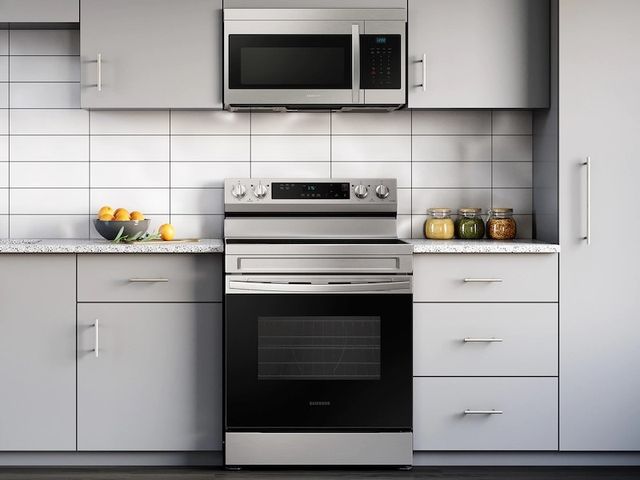
Samsung appliances deliver more ecosystem depth than almost anything else on the market, and that depth comes with trade-offs worth understanding before you commit to a full suite rather than a single machine.
Pros
One app for the whole house
SmartThings covers kitchen and laundry together, which removes the four-app problem that quietly kills most smart kitchens.
Deep design customization
Bespoke panels and finishes can be changed later without replacing the appliance, which protects the look through a future remodel.
A genuinely useful AI feature set
Interior cameras, inventory tracking, and recipe suggestions built from real contents go well beyond novelty on the flagship models.
Remote diagnostics that shorten repairs
Connected error reporting means a technician often knows the problem before arriving, which cuts return visits.
Broad category coverage
Refrigeration, cooking, dishwashing, ventilation, and laundry all live in the same ecosystem, so the suite grows without fragmenting.
Cons
Features depend on network reliability
Remote control and notifications stop when the internet does, and a weak kitchen signal undercuts otherwise strong machines.
Capability varies by model year and series
Two appliances wearing similar badges can differ significantly, so the specific model matters more than the brand name.
Setup takes real attention up front
Pairing, grouping, and building routines is time well spent, but it is time, and skipping it leaves expensive features unused.
Connected Kitchens in Hampton Roads: Storms, Salt Air, and PCS Moves
Coastal Virginia puts two pressures on a connected kitchen that a national buying guide never mentions. The first is weather. Hurricane season runs through the fall, and the region loses power often enough that most households have a candle drawer. A connected refrigerator is quietly excellent here, because a temperature alert tells you exactly how long the box has been warming and whether the contents are still safe, and because after a multi-day outage the app timeline is more reliable than memory. The second pressure is turnover. With Naval Station Norfolk, Langley, and the shipyards nearby, a large share of local households will move within a few years, which changes how you should think about a smart suite.
- Expect to re-pair every appliance after a move or a router replacement, and keep the SmartThings login somewhere the whole household can reach.
- Salt air is hard on exterior-facing hardware and on finishes near a door that stays open, so ask about finish durability if you live within a few miles of the water.
- Humidity in a Virginia summer means refrigerator door alarms and dishwasher dry cycles both work harder, and a connected door alarm catches the door left ajar before the compressor runs all afternoon.
- If a move is likely, favor standard-width appliances and keep the original panel kits, since Bespoke panels can be swapped to suit the next kitchen.
- Renters and base housing residents should look hard at over the range microwaves and freestanding ranges rather than built-in configurations, which do not travel.
- Confirm whether your next kitchen has a dedicated 240-volt range circuit before assuming an electric slide-in will drop in.
Top Samsung Appliances for a Connected Kitchen
The lineup below spans the categories that benefit most from connectivity, from a flagship Bespoke AI refrigerator down to the over the range microwaves that handle both cooking and ventilation in most local kitchens. One laundry pick is included on purpose, since SmartThings treats the washer as part of the same house rather than a separate system. Every model here is available through East Coast Appliance with delivery and professional installation by our own crews.
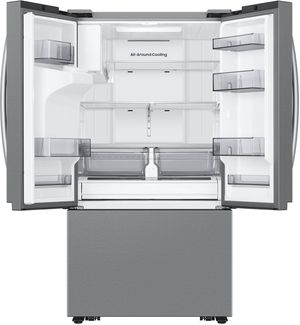
Samsung Bespoke AI 36” 30.5 Cu. Ft. Fingerprint Resistant Stainless Steel French Door Refrigerator with External Water & Ice Dispenser
Shop French Door Refrigerators
This is the anchor appliance the rest of a connected kitchen builds around. At 30.5 cubic feet in a 36-inch width, it holds a full week of groceries plus a holiday turkey without forcing a second trip, and the French door layout keeps the most-used shelves at eye level. The external water and ice dispenser means the door stays closed for the twenty times a day someone wants a glass of water, which matters in a Virginia July. Fingerprint resistant stainless holds up to a household where everyone is in and out. Best for families ready to make the refrigerator the hub of the house.
Top Features
- Bespoke AI platform: The flagship tier where the intelligent features live, including the AI capability that makes this more than a Wi-Fi refrigerator.
- 30.5 cubic feet of capacity: Large-family volume in a standard 36-inch opening, so it fits where a smaller box used to sit.
- External water and ice dispenser: Cold water and ice without opening the door, which reduces temperature swings and energy use in a humid climate.
- Fingerprint resistant stainless steel: Keeps a busy kitchen looking finished between cleanings.
Samsung Bespoke 30” Stainless Steel Slide-In Electric Range

Cooking is where connected features earn their place, and a slide-in range is where the kitchen gets its cleanest line. This 30-inch Bespoke model drops into a standard opening with the control panel forward and the cooktop edges overlapping the counter, so there is no crumb gap on either side. Remote preheat turns the drive home into part of the cook time, and the Bespoke finish coordinates with the refrigerator above. Best for remodelers who want a built-in look without cabinet modification, and for anyone tired of a cold oven at dinnertime.
Top Features
- Slide-in installation: Overlaps the countertop for a built-in appearance in a standard 30-inch cutout.
- Bespoke design family: Coordinates visually with the rest of the Samsung Bespoke suite in a matched kitchen.
- Connected cooking control: Fits the SmartThings routines described earlier, including remote preheat and cycle alerts.
- Stainless steel finish: A durable, neutral surface that works with nearly any cabinet color.
Samsung 1.7 Cu. Ft. Fingerprint Resistant Stainless Steel Over The Range Microwave

Shop Over the Range Microwaves
At 1.7 cubic feet, this is the roomiest of the over-the-range models in this group, which is the difference between a casserole dish that fits and one that does not. Mounted above the range it handles ventilation as well as cooking, so it does two jobs in the same square footage, a real advantage in the compact kitchens common in older Norfolk and Richmond homes. The fingerprint resistant stainless finish sits directly at eye level, where smudges show most. Best for households that want maximum interior room from a combination microwave and vent.
Top Features
- 1.7 cubic foot capacity: The largest interior in this microwave group, with room for full-size dishes.
- Over-the-range mounting: Combines microwave and ventilation in one unit, which frees counter space.
- Fingerprint resistant stainless steel: Stays clean-looking in the most-touched spot in the kitchen.
- Coordinated Samsung styling: Matches the finish of the range below and the refrigerator alongside.
Samsung 1.6 Cu. Ft. Stainless Steel Over The Range Microwave

Shop Over the Range Microwaves
This is the practical middle of the microwave lineup, offering 1.6 cubic feet of interior room in a straightforward stainless package. It is the sensible pick for a kitchen refresh where the goal is a clean, matched look and reliable daily performance rather than a long feature list. Because it mounts over the range, it also handles cooktop ventilation, which keeps the wall above the range uncluttered. Best for homeowners updating a kitchen on a defined budget, and for rental properties and second homes near the water where simple and durable wins.
Top Features
- 1.6 cubic foot capacity: Generous everyday room without stepping into the largest tier.
- Stainless steel finish: Coordinates with a stainless suite and cleans up easily.
- Integrated cooktop ventilation: Handles steam and cooking odors from the range below.
- Straightforward operation: Familiar controls that any member of the household can use correctly.
Samsung 1.1 Cu. Ft. Fingerprint Resistant Stainless Steel Over The Range Microwave

Shop Over the Range Microwaves
Not every kitchen has the vertical room for a tall microwave, and that is where a 1.1 cubic foot model becomes the right answer instead of a compromise. The shorter cabinet height leaves more clearance between the cooktop and the underside of the unit, which is genuinely useful for anyone who cooks with tall stockpots. Fingerprint resistant stainless keeps the front looking clean at the height where hands land most. Best for kitchens with a low cabinet run above the range and for cooks who want more headroom over the burners.
Top Features
- 1.1 cubic foot capacity: A shallower profile that preserves clearance above the cooktop.
- Fingerprint resistant stainless steel: Resists smudging in the highest-traffic spot on the wall.
- Over-the-range ventilation: Pulls steam and odors away from the burners while the microwave is idle.
- Compact-kitchen fit: Designed for the tighter cabinet openings common in older homes.
Samsung 1.1 Cu. Ft. Fingerprint Resistant Stainless Steel Over The Range Microwave

Shop Over the Range Microwaves
This is the close sibling of the model above, matching it on capacity and finish while sitting at a slightly different point in the series. Because the two are so similar on paper, ask our appliance team which one matches the venting configuration and control set you want before ordering, since that detail is what separates them rather than size. Everything else applies equally: the same compact 1.1 cubic foot interior, the same fingerprint resistant front, and the same dual role as microwave and range ventilation. Best for shoppers comparing two near-identical options who want the one that fits their venting setup.
Top Features
- 1.1 cubic foot capacity: The same compact interior as its sibling model, with generous cooktop clearance.
- Fingerprint resistant stainless steel: A clean-looking front in the most-handled spot in the kitchen.
- Series difference worth confirming: Ask our team to compare venting and control details against the companion model before you buy.
- Over-the-range mounting: One unit covering both microwave duty and cooktop ventilation.
Samsung 4.0 Cu. Ft. White ActiveWave™ Agitator Top Load Washer with Soft-Close Lid
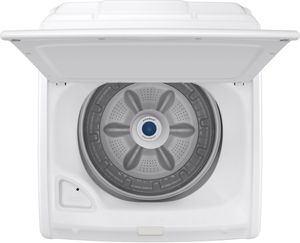
A connected kitchen does not stop at the kitchen door, and this is the appliance that proves it. The washer joins the same SmartThings account as everything else, which is what makes the cycle-complete alert on the refrigerator screen possible instead of theoretical. The ActiveWave agitator handles the genuinely dirty loads a Tidewater household generates, from beach towels to yard clothes, and the 4.0 cubic foot drum suits a couple or a small family. The soft-close lid ends the slam that used to wake the house. Best for households building one connected ecosystem across the whole home rather than only the kitchen.
Top Features
- ActiveWave agitator: Mechanical wash action for the heavily soiled loads that towels and outdoor clothing produce.
- 4.0 cubic foot capacity: A practical mid-size drum for couples and smaller families.
- Soft-close lid: Lowers quietly instead of dropping, which matters in a laundry closet near a bedroom.
- Joins the same app as the kitchen: Laundry notifications appear alongside everything else instead of in a separate application.
Bring Your Connected Kitchen to Life With Samsung Appliances
Samsung appliances pull a kitchen together through one app instead of four, deliver AI features that go beyond novelty on the flagship models, and offer finish and panel flexibility that survives a future remodel. The tier you choose should follow how you actually cook and how reliable your network is, not the length of the feature list. Get the refrigerator right first and the rest of the suite falls into place.
Come see the finishes in person. Shop Samsung appliances online at East Coast Appliance or visit a showroom in the Hampton Roads or Richmond area to compare matte black steel against navy steel under real light and open the doors yourself. Our appliance specialists know the full lineup and will tell you honestly when a core Wi-Fi model does everything you need, our own crews handle delivery and professional installation, and our local service team is still here years after the sale. Big-box competitors ship the box and leave the connected setup, the venting, and the electrical to you. Stop in or reach out to our team and we will map the whole kitchen with you.
Read more:
4 Stylish Samsung Microwaves to Complete Your Kitchen
Frequently Asked Questions about Samsung Appliances
Samsung appliances are among the strongest choices for a smart home kitchen because the entire lineup runs through the SmartThings platform, so refrigeration, cooking, dishwashing, and laundry all report to one app. That single-ecosystem depth is what keeps connected features in daily use instead of abandoned across four separate manufacturer apps.
Samsung smart appliances join your home Wi-Fi network on the 2.4 GHz band and are then paired to your account in the SmartThings app, where you assign each one to a room. Signal strength at the appliance location matters more than router speed, so test the spot before delivery and add a mesh node if the kitchen sits far from the router.
SmartThings is the Samsung platform that controls, monitors, and automates connected devices from one application, and it is what turns individual smart appliances into a connected kitchen. The appliances run normally without it, but remote start, notifications, routines, and diagnostics all require the app, so anyone buying for the smart features should plan on using it.
Yes, every Samsung appliance operates fully through its own controls when the internet is down, so the oven still bakes and the refrigerator still cools during an outage. What you lose is remote access, push notifications, and app-based diagnostics until the connection returns.
AI features concentrate in the Bespoke AI models, where interior cameras, item recognition, AI Home touchscreen panels, and energy insights are built in. Core Wi-Fi models still offer remote control, alerts, and self-diagnostics without the cameras or large screens, so confirm the capability on the specific model rather than assuming it from the brand.
Samsung appliances support the major voice assistants alongside Bixby, so basic voice commands and status checks work through the smart speakers most households already own. Growing Matter support is also widening cross-brand compatibility, though the deepest control still comes from SmartThings itself.
Why Trust East Coast Appliance?
Locally owned and operated since 1988, East Coast Appliance is the largest independent appliance dealer in Virginia. We sell it ALL — from new name-brand appliances to scratch-and-dent appliances to our very own refurbished appliances. Aside from our huge selection of every major brand and everyday low prices, what sets us apart from our competitors is that we service what we sell and that we are locally owned and operated with factory-trained associates. And if you’re local, great news: East Coast Appliance is committed to providing the absolute lowest prices on the same available brand and model — simply bring in the ad of the local retail competitor while the lower price is in effect and you’ll receive your price match.
Shop The Latest Appliances at East Coast
There is a reason we are dubbed “The Discount King” — for unbeatable deals, shop laundry appliances online at East Coast Appliance. Our friendly associates are always happy to help you, whether you call us or use our online chat feature. Better yet, stop by one of our showrooms to see why we are the best appliance store in Virginia. Visit us today!