

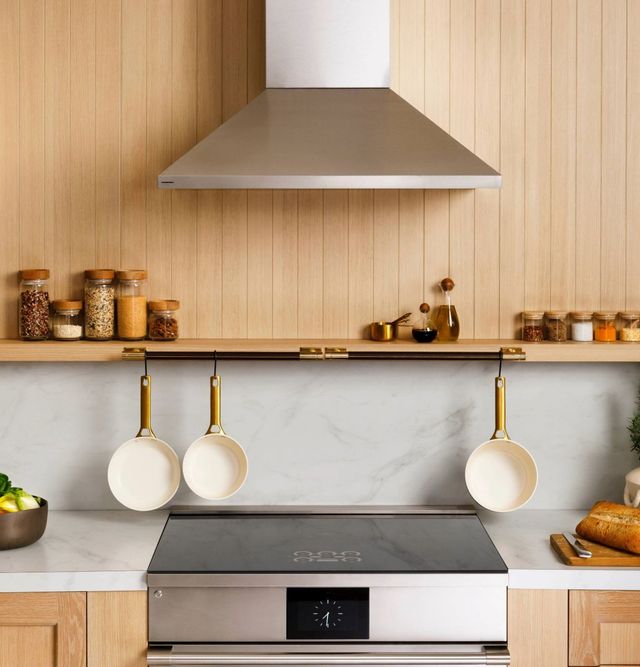
The steak hits the cast iron pan, a blue haze fills the kitchen in about ninety seconds, and the smoke detector down the hall starts chirping while somebody props open the back door in February. The hood above the range has been running on high the entire time. That is the moment it becomes obvious that kitchen range ventilation hoods are not all built to move the same amount of air, and that the unit over the stove is doing far less work than anyone assumed. The greasy film already building on the cabinet doors beside the cooktop tells the same story.
Here is the part that turns all of that around. Ventilation only looks complicated because three separate decisions get treated as one, and our team untangles them with Virginia and North Carolina homeowners every week. This guide compares every major style of kitchen range ventilation hoods, explains ducted versus ductless venting in plain terms, works through CFM and sizing with real numbers, and helps you match a hood to your kitchen layout and your cooking habits.
Find the Right Range Hood for the Way You Actually Cook
Our specialists match hood style, airflow, and venting method to your kitchen, then handle delivery, ducting, and professional installation. Shop hoods online or in any East Coast Appliance showroom.
Key Takeaways
- Three decisions, not one: Style, venting method, and airflow are separate choices. Pick the venting method first, because it decides which styles are even possible in your kitchen.
- CFM has two sizing formulas: Use roughly 100 CFM per linear foot of cooktop width for electric cooking, or total burner BTU divided by 100 for gas, then buy to the higher of the two numbers.
- Ductwork beats the number on the box: Every 90-degree elbow, length of flex duct, and undersized pipe drops real airflow below the rated CFM, so a short, straight, rigid run matters as much as the spec sheet.
- Wider and lower captures more: A hood should match cooktop width at minimum and ideally overhang 3 inches per side, mounted 20 to 24 inches above electric or 24 to 30 inches above gas.
What Kitchen Range Ventilation Hoods Actually Do
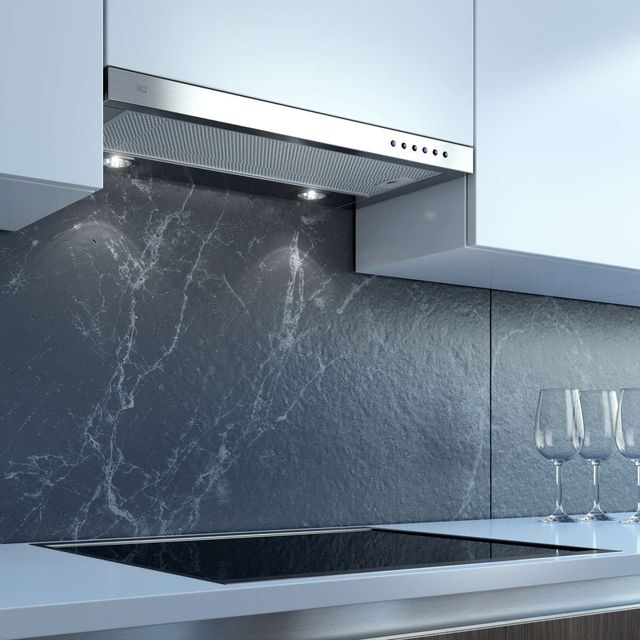
A range hood has one job, and it is narrower than most people think. It captures grease, smoke, steam, heat, odors, and combustion byproducts in the air directly above your burners and moves them out of the house before they spread anywhere else.
That last part matters. A hood is not an air purifier for the room. It is a collection device positioned over the source, and it only works on what rises into it.
Skip real ventilation and the results show up slowly, then all at once:
- Grease residue settles on cabinet doors, the ceiling above the range, and the tops of upper cabinets, where it turns sticky and yellow.
- Cooking odors move into curtains, upholstery, and clothing in nearby closets.
- Steam from boiling and simmering adds humidity that feeds mold and mildew in already humid homes.
- Gas burners release nitrogen dioxide and carbon monoxide, and without exhaust to the outdoors those byproducts stay in your air.
This is also why capture at the source beats filtering room air. Once a plume of grease-laden steam spreads past the edges of the hood, no amount of fan speed brings it back. Placement, capture area, and airflow decide performance long before styling does.
Ventilation has also become a code-relevant part of kitchen design in many jurisdictions, especially where high-output gas cooking is involved. So treat the rest of this article as three separate questions: how the hood vents, what style it is, and how much air it moves.
Read more:
- Benefits of Installing a Ductless Range Hood in Your Kitchen
- Downdraft Cooktops vs Traditional Venting: Which Is Better?
Ducted, Ductless, and Convertible Venting Explained
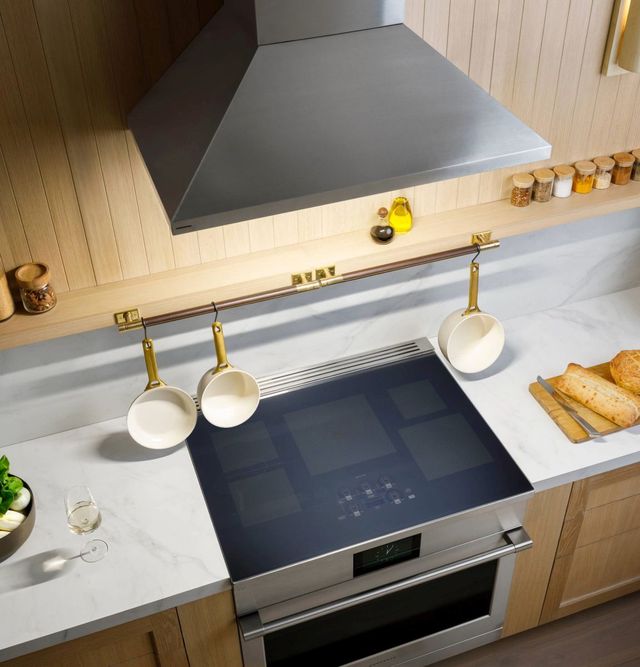
Start here, because venting method limits which styles you can even shop. A kitchen with no path to an exterior wall or roof rules out several options immediately, and finding that out after delivery is an expensive lesson.
Ducted Hoods
Ducted hoods, sometimes called vented hoods, exhaust everything outdoors through a wall, a soffit, or the roof. Heat, moisture, smoke, odor, and grease all leave the building. This is the highest-performing option and the only one that removes humidity, which matters a great deal in coastal Virginia and North Carolina.
Common duct sizes include 3 1/4 by 10 inch rectangular, plus 6 inch, 8 inch, and 10 inch round. Bigger blowers need bigger duct, and the hood’s specification sheet states the minimum.
Ductless or Recirculating Hoods
Ductless hoods, also called recirculating hoods, pull air through a grease filter and then a charcoal or carbon filter before pushing it back into the room. They cut odor and catch some grease. They do nothing about heat or moisture, because the air never leaves.
Charcoal filters are consumables. Plan on replacing them every three to six months depending on how often you cook, and budget for that as part of ownership.
Convertible Hoods
Most hoods sold today are convertible, meaning they ship ducted-ready and can be configured either way with a recirculating kit. That flexibility is the practical answer for condos, interior walls, high-rise units, and rentals where cutting an exterior penetration is not realistic. Buy convertible when there is any chance you will duct it later during a remodel.
Why Rated CFM Is Not Real CFM
Here is what most comparison articles leave out. The CFM number on the box is measured with almost no resistance, and your ductwork adds plenty of it. Real delivered airflow drops with every restriction between the blower and the outdoors.
- Each 90-degree elbow costs the equivalent of several feet of straight duct.
- Flexible duct with a ribbed interior creates far more friction than smooth rigid metal.
- Reducing an 8 inch outlet down to a 6 inch duct throttles the blower no matter how strong it is.
- Long horizontal runs, crushed sections, and mesh-screened exterior caps all shave airflow.
There is one more code consideration for powerful hoods. Many jurisdictions follow the residential mechanical code threshold at 400 CFM, above which the home needs a makeup air system to replace the air being exhausted. Without it, a strong hood can pull air backward down a water heater or fireplace flue. Confirm the requirement with your local building department in Virginia or North Carolina before committing to a high-output hood.
The 7 Main Types of Kitchen Range Ventilation Hoods
Style is where most shoppers start, and it is the easiest decision once venting is settled. These are the seven types of range hoods you will actually find, and each one exists because a specific kitchen layout needs it. All CFM and price figures below are typical ranges across brands rather than guarantees, so verify against current product specs before you buy.
Under Cabinet Hoods
An under cabinet hood mounts to the bottom of the cabinet above your range, which makes it the most retrofit-friendly style on the market. Widths run 24, 30, 36, and 48 inches, with airflow typically from 200 to 600 CFM and pro-style versions going higher. The install is straightforward because the cabinet does the structural work.
The limitation is depth and capture volume. Standard cabinets are only so deep, so the hood sits shallow over the front burners, and a shallow canopy holds less of the rising plume.
Wall Mount Chimney Hoods
A wall mount chimney hood, also called a wall canopy hood, bolts to the wall with a decorative chimney cover concealing the duct up to the ceiling. It replaces the cabinet above the range entirely. Widths of 30, 36, and 48 inches are common, with 400 to 900 CFM typical.
The payoff is a taller, deeper capture area and a real design statement. The requirement is an open wall above the range, which means giving up that cabinet.
Island or Ceiling Mount Hoods
Island hoods suspend from the ceiling above a cooktop that sits away from any wall. Because there are no side walls or backsplash to help contain the plume, open-air installs lose smoke sideways and need more airflow than the same cooktop against a wall. Expect 600 to 1,200 CFM and widths of 36 to 48 inches or larger.
Perimeter aspiration designs pull air around the outer edge of a flat panel to speed up capture, and flush ceiling cassettes hide almost everything in the ceiling for a minimal look. The limitation is structural and expensive: ceiling framing, a long vertical duct run, and precise centering over the cooktop.
Downdraft Ventilation
downdraft ventilation skips the overhead hood. A telescoping vent rises 8 to 15 inches behind or beside the cooktop at the push of a button and retracts when you are done, with airflow generally from 400 to 600 CFM.
It is the right answer when nothing can hang above the cooktop, such as an island with a sightline you refuse to block. Be honest about the physics, though. Smoke and heat rise, and a downdraft has to pull them sideways and down against that natural movement, so tall stockpots and rear burners are where it struggles most. Ducting routes under the floor or through the base cabinets, which adds cost in existing homes.
Insert or Liner Hoods
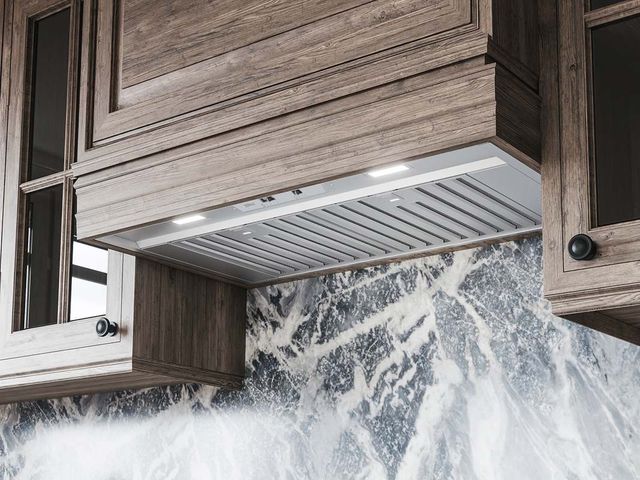
An insert, also called a liner or a power pack, is just the blower, filters, lights, and controls in a rectangular housing. It installs inside a custom surround built from wood, plaster, brick, or metal. Widths from 28 to 48 inches are common, with 400 to 1,200 CFM depending on the blower.
This is how designers get a hood that matches the cabinetry exactly, because the visible shell is built on site. The limitation is that the surround is a separate cost and typically a carpentry project, and the insert has to be specified before that surround gets built.
Over the Range Microwave Combinations
An over the range microwave hood combines two appliances in the space of one, which is why it dominates builder kitchens and compact layouts. Widths are essentially 30 inches with some 36 inch models, and airflow is usually 200 to 400 CFM.
It is a space-saving compromise, and the trade-offs are real. Most are configured to recirculate, the capture area sits shallow and close to the burners, the fan runs louder for the air it moves, and the microphone-level rattle gets worse with age. If you cook with high heat regularly, this is the style to move away from.
Professional Grade Hoods
Professional hoods are built to keep up with high-BTU gas and dual-fuel ranges. Airflow starts around 600 CFM and climbs past 1,200, with widths of 36, 48, and 60 inches. Stainless baffle filters replace mesh, heat sentry controls automatically kick the blower to high when the hood senses excessive heat, and the housings are deeper for better capture.
Two realities come with that power. These hoods almost always need makeup air, and they need duct sized to match, often 8 or 10 inch round. Pair one with a professional range and the kitchen finally handles searing and wok cooking without filling with smoke.
Kitchen Range Ventilation Hoods Compared Side by Side
Find your kitchen layout in the first column and read across. Every figure is a typical range across brands, not a guarantee.
| Hood Type | Best For | Typical CFM Range | Common Widths | Venting Options | Installation Difficulty | Typical Price Range |
|---|---|---|---|---|---|---|
| Under Cabinet | Retrofits and cabinet-above layouts | 200 to 600 | 24, 30, 36, 48 inches | Ducted, ductless, convertible | Easy | $200 to $1,500 |
| Wall Mount Chimney | Open wall above the range, design focus | 400 to 900 | 30, 36, 48 inches | Ducted or convertible | Moderate | $500 to $3,000 |
| Island or Ceiling Mount | Island and peninsula cooktops | 600 to 1,200 | 36 to 60 inches | Ducted, usually vertical | Difficult | $900 to $4,000 |
| Downdraft | Cooktops with no overhead option | 400 to 600 | 30, 36, 48 inches | Ducted through floor or base | Difficult | $800 to $2,500 |
| Insert or Liner | Custom surrounds and designer kitchens | 400 to 1,200 | 28 to 48 inches | Ducted | Moderate to difficult | $500 to $2,500 |
| Over the Range Microwave | Small kitchens and tight budgets | 200 to 400 | 30, 36 inches | Recirculating or ducted | Easy | $250 to $900 |
| Professional Grade | High-BTU gas and dual-fuel ranges | 600 to 1,500 | 36, 48, 60 inches | Ducted only | Difficult | $1,200 to $6,000 |
Filters deserve their own quick comparison, because they drive both grease capture and long-term cost.
| Filter Type | Material | Best Use | Cleaning Method | Replacement Needed |
|---|---|---|---|---|
| Baffle | Stainless steel | High-heat and pro-style cooking | Dishwasher or hot soapy water | No, cleaned and reused |
| Mesh or Aluminum | Layered aluminum mesh | Everyday cooking, most hoods | Dishwasher or degreaser soak | Occasionally, when deformed |
| Charcoal or Carbon | Activated carbon | Ductless and recirculating setups | Not cleanable | Yes, every 3 to 6 months |
Read the two tables together and the pattern is clear. Island, insert, and professional hoods dominate on performance because they combine high airflow with real capture volume, while under cabinet and microwave combination hoods win on cost and simplicity. On filters, stainless baffles cost the most up front and nothing after that, and charcoal filters are the only line item that keeps repeating.
How to Size a Range Hood: CFM, Width, and Mounting Height
Most kitchens need a range hood between 400 and 600 CFM. Light cooks with an electric cooktop can be satisfied near 300 CFM, while frequent high-heat searing, wok work, or a griddle calls for 600 to 1,200 CFM.
There are two accepted ways to calculate it, and they answer slightly different questions.
- For electric cooking, allow roughly 100 CFM for every linear foot of cooktop width. A 36 inch cooktop is 3 feet, so that math lands at 300 CFM.
- For gas cooking, add the BTU rating of every burner and divide by 100. A gas range totaling 60,000 BTU points to 600 CFM.
When the two methods disagree, buy to the higher number. A hood running on a lower speed is quiet and efficient, while a hood that maxes out on every dinner never catches up.
Airflow benchmarks by cooking style:
- Light cooking, mostly reheating and boiling: around 300 CFM
- Everyday cooking with regular sautéing and roasting: 400 to 600 CFM
- Frequent searing, frying, wok cooking, or griddle use: 600 to 1,200 CFM
- Commercial-style ranges above 60,000 total BTU: 1,000 CFM and up with makeup air
Width and Mounting Height
Width is simpler. The hood should match the cooktop width at absolute minimum, and it performs noticeably better when it extends 3 inches past each side. That means a 36 inch hood over a 30 inch range, and island hoods gain the most from the extra overhang because they have no walls helping them.
Mounting height is where good hoods get sabotaged. General guidance is 20 to 24 inches above an electric cooktop and 24 to 30 inches above gas, and the manufacturer’s installation manual gives the exact range for your model. Mount too high and the plume spreads before it reaches the canopy. Mount too low and you create heat exposure, clearance problems, and a hood you knock your head on while stirring.
Duct Diameter and Blower Location
Two specs affect real-world results more than shoppers expect. Match duct diameter to the hood outlet, because reducing an 8 inch outlet to a 6 inch duct cuts the cross-sectional area by nearly half and throttles the blower for the life of the hood. Never step down to save on materials.
Blower location changes both airflow and noise:
- Integrated blowers sit inside the hood, cost the least, and put the motor noise directly in the kitchen.
- Inline blowers mount in the duct run, often in an attic or crawlspace, which moves much of the sound away from you.
- Exterior remote blowers mount on the roof or an exterior wall, deliver the quietest kitchen at a given CFM, and cost the most to install.
Range Hood Features Worth Comparing Before You Buy
Two hoods with the same CFM rating can feel completely different to live with. These are the specifications worth lining up side by side.
Filters
Stainless baffle filters channel grease down into a trough and handle high heat without deforming, and they go straight in the dishwasher. Mesh or aluminum filters cost less and work well for everyday cooking, though they eventually get clogged or bent. Charcoal filters are odor filters only, they cannot be washed, and they are a recurring purchase on any recirculating setup.
Noise
Hood noise is rated in sones, and lower is better. A hood running under about 1.5 sones on low speed lets you hold a normal conversation in the kitchen. High speed on any powerful hood is loud, which is exactly why an inline or exterior blower is worth the money on a 900 CFM unit. Two hoods at 600 CFM can differ by several sones based on blower design and housing insulation.
Lighting
Task lighting on the cooktop is one of the most-used features on any hood. LED lighting has replaced halogen on most current models, runs cooler, and lasts far longer. Look for dimmable multi-level lighting and for lamps positioned toward the front of the canopy, because lights set far back leave the front burners in shadow.
Controls and Convenience
- Push button, capacitive touch, and slide controls, with touch being easiest to wipe clean
- Three to six fan speeds, plus a boost or turbo setting for searing
- Delay or auto shutoff timers that keep the blower running a few minutes after cooking
- Heat sensors that automatically raise fan speed when temperatures spike
- Filter cleaning reminders so maintenance does not depend on memory
- Wi-Fi and app connectivity, including hoods that respond automatically to the range below them
Materials, Finishes, and Certification
Stainless steel remains the default, and black stainless, matte black, and glass canopy designs all have a place depending on the rest of the suite. Panel-ready and insert options let cabinetry take over the visible surface entirely. Whatever you choose, matching the finish family across your kitchen appliance packages keeps the room from looking assembled by accident.
One last comparison tool: look for HVI certification. The Home Ventilating Institute independently tests airflow, and HVI-rated figures are measured at working static pressure rather than free air, which makes them far more comparable across brands than marketing numbers.
Advantages and Disadvantages of Kitchen Range Ventilation Hoods
Upgrading ventilation is one of the few kitchen improvements you notice on the very first night. It also comes with honest trade-offs in cost, noise, and installation work, and knowing them up front leads to a better purchase.
Pros
Measurably better indoor air
A ducted hood removes combustion byproducts from gas burners along with smoke and fine particles, instead of circulating them through the house.
Cabinets and finishes stay clean
Capturing grease at the source keeps that sticky film off cabinet doors, backsplash grout, and painted ceilings, which protects the most expensive surfaces in the room.
Real comfort during high-heat cooking
Pulling heat and steam out keeps the kitchen livable in July, and moisture removal matters in humid coastal summers where the air conditioning is already working hard.
Freedom to cook more ambitiously
Searing, frying, and wok cooking stop being a negotiation with the smoke detector, which changes what you are willing to make on a weeknight.
Design impact and resale appeal
A chimney or island hood is a focal point, and buyers read proper ventilation as a sign the kitchen was done correctly.
Cons
Ducting can be the expensive part
In an existing home, cutting an exterior penetration, routing rigid duct, and patching drywall or roofing can rival the price of the hood itself.
High CFM brings noise and makeup air
Powerful hoods are louder, and once you cross the 400 CFM threshold many jurisdictions require a makeup air system, which adds equipment and cost.
Read more:
- Range Hood Installation - Everything You Need to Know
- Ventilation Options for a Kitchen Island with Stove Setup
Matching a Range Hood to Your Kitchen Layout and Installation
The fastest path to the right hood is to name your layout first, then shop only the styles that fit it.
- Cooktop against a wall with cabinets above: under cabinet or an insert built into that cabinet, sized to the cooktop or 3 inches wider per side.
- Cooktop against a wall with open space above: wall mount chimney hood, which uses the full height for a deeper capture area.
- Island or peninsula cooktop: island or ceiling mount hood at higher CFM, or downdraft if nothing can hang overhead.
- Low ceilings, condos, or interior walls: convertible under cabinet hood, or a slim recirculating model where ducting is impossible.
- Custom designer surround: insert or liner specified before the surround is built.
Replacing an Over the Range Microwave With a Real Hood
This is the single most common ventilation upgrade, and it involves more than swapping boxes. The microwave’s mounting plate comes out, and the cabinet above usually needs modification or removal depending on whether you go under cabinet or chimney. The electrical outlet that served the microwave often sits in the wrong place for a hood and may need relocating. If the microwave was recirculating, there is no existing duct at all, so a new run and an exterior cap become part of the job. Plan for a countertop or built-in microwave somewhere else in the kitchen at the same time.
Installation Realities
Ducted work touches the building envelope, which is why it is not a casual weekend project. Expect some or all of the following: a permit depending on your municipality, an exterior wall penetration or roof cap with proper flashing, a dedicated electrical circuit for higher-output blowers, cabinet cutting and trim work, and duct sealing throughout.
One detail our installers check on every ducted job: use rigid metal duct with foil-taped joints and an exterior cap with a working damper, because ribbed flex duct and screened caps without dampers are the two most common reasons a 600 CFM hood behaves like a 350 CFM hood and lets cold air backdraft in winter.
Professional installation is also what prevents rattling duct runs, whistling at high speed, and backdrafting from a water heater flue. At East Coast Appliance, our own installation crews handle ducting work, and our in-house service department is local when something needs attention later.
What This Means in Virginia and North Carolina
Regional conditions change the priorities here. Summers across Richmond, Virginia Beach, Chesapeake, and Newport News run humid for months, so a ducted hood that removes steam does more for comfort and mold prevention than the same hood would in a dry climate. Coastal salt air also argues for quality stainless and a well-sealed exterior cap.
Older homes bring the other half of the story. Plaster walls, balloon framing, brick exteriors, and finished basements often mean the obvious duct path is not available and the run has to be rerouted through a soffit or up through a chase.
Before you shop, measure three things: cooktop width, ceiling height, and the available duct path from the hood location to the outdoors. Bring those numbers to any East Coast Appliance showroom and our specialists can review them with you in person, alongside the range or cooktop you are pairing the hood with.
Cross Drafts and Capture Depth: The Quiet Reasons Hoods Underperform
Two factors almost never appear on a spec sheet, and both of them decide whether your airflow actually reaches the smoke. The first is capture depth. Standard cooktops are about 21 to 22 inches deep front to back, while many under cabinet hoods measure only 17 to 20 inches deep, which leaves the front burners partially outside the canopy footprint. That is why searing in a skillet on a front burner sends smoke past the hood while the same pan on a rear burner behaves. The second factor is competing air movement in the room, because a hood is only fighting for the rising plume and it loses to any stronger current nearby, which makes both problems cheap to solve at the planning stage and expensive to solve later.
- Cook on rear burners for anything that smokes heavily, since the rear of the cooktop sits fully inside the capture area.
- Compare the hood’s depth spec, not just its width, and prefer deeper canopies or a chimney style when front-burner searing is routine.
- Keep ceiling fans off while cooking, because downward airflow flattens the rising plume before it reaches the hood.
- Aim HVAC supply registers away from the cooktop, and note that a register directly above a range works against the hood constantly.
- Give a strong hood a source of replacement air, whether that is a makeup air damper or simply cracking a nearby window in a tight house.
- Turn the blower on two to three minutes before high-heat cooking so the column of air is already moving when the pan starts smoking.
Read more:
- 7 Range Hoods That Will Upgrade Your Kitchen
- 6 Stainless Steel Range Hoods to Complement Your Kitchen Design
Shop Kitchen Range Ventilation Hoods at East Coast Appliance
The lineup below spans island, chimney, insert, and under cabinet styles so it maps directly back to the comparison table above. Each pick notes the kitchen layout and cooking intensity it suits best. Every one is available with local delivery, professional installation including ducting work, and in-house service across Virginia and North Carolina.
Monogram 36” Stainless Steel Island Range Hood
An island cooktop has no side walls to help contain smoke, which is the open-air capture problem covered earlier in this guide. This Monogram hood suspends from the ceiling above a 36 inch island cooktop and works from all four sides, with a heavy commercial-grade stainless shell built to be looked at from every angle in an open-plan room. It is the pick for a serious home cook whose cooktop sits in the middle of the kitchen. Buy it when the island is the center of the house and the ventilation has to perform as well as it presents.
Top Features
- Ceiling-mounted island design: Built for cooktops with no adjacent wall, where capture is hardest and airflow matters most.
- 36 inch width: Matches a standard 36 inch island cooktop and covers the burners from every side.
- Ducted vertical venting: Exhausts outdoors through the ceiling so heat and humidity actually leave the kitchen.
- Professional stainless construction: Coordinates with the rest of a Monogram suite and holds up in coastal air.
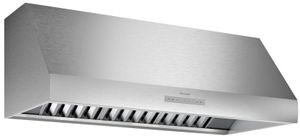
Thermador Pro Harmony 48” Stainless Steel Under Cabinet Range Hood
Shop Under Cabinet Range Hoods
This is the professional-grade end of the under cabinet category, built for a 48 inch pro range putting out serious BTU. The full 48 inch width covers every burner including the corners, and the Pro Harmony housing is engineered for the heat and grease volume that high-output gas cooking produces. If your kitchen has a commercial-style range under existing cabinetry, this is how you ventilate it without moving to a chimney hood. Confirm duct sizing and makeup air requirements during planning, and our team can walk through both with you.
Top Features
- 48 inch professional coverage: Spans a full 48 inch pro range so no burner sits outside the capture area.
- High-output blower design: Matched to high-BTU gas and dual-fuel cooking rather than everyday reheating.
- Commercial-style stainless finish: Pairs directly with Thermador ranges and cooktops for a consistent look.
- Cabinet-mounted install: Delivers pro-level ventilation without giving up the cabinet above the range.
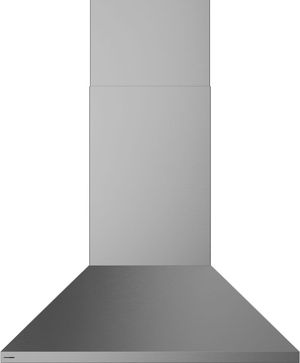
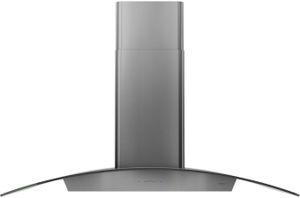
Café 30” Stainless Steel Wall Mount Glass Canopy Chimney Hood

When the wall above the range is open, a chimney hood turns that space into both a design feature and a deeper capture area. This Café model pairs a glass canopy with a stainless chimney, so it reads lighter visually than a solid metal hood while still using the full height above a 30 inch range. It suits a kitchen where the range wall is the focal point and the homeowner is willing to trade one upper cabinet for real ventilation. Buy it for style-forward kitchens that still cook hard.
Top Features
- Wall mount chimney design: Uses the open wall above the range for a taller, more effective capture area.
- Glass canopy styling: Keeps sightlines light and open compared with a full stainless canopy.
- 30 inch width: Sized for the most common range width in Virginia and North Carolina kitchens.
- Café design language: Coordinates with Café ranges, wall ovens, and hardware finish options.
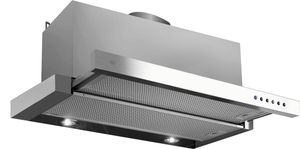
XO Fabriano Collection 36” Stainless Steel Under Cabinet Range Hood
Shop Under Cabinet Range Hoods
Design-driven kitchens often need strong airflow in a slim body, and that is exactly the space the Fabriano Collection occupies. At 36 inches wide it gives a 30 inch range the 3 inch per side overhang that improves capture, or covers a 36 inch cooktop edge to edge. XO builds this line with a clean European profile and dishwasher-safe filters, so it stays looking sharp with routine maintenance. Choose it when the hood needs to feel like a specified design element rather than a builder-grade default.
Top Features
- 36 inch capture width: Provides the recommended overhang on a 30 inch range or full coverage on a 36 inch cooktop.
- Slim European profile: Fits tight cabinet openings without looking bulky above the cooktop.
- Washable metal filters: Go in the dishwasher instead of becoming a recurring replacement cost.
- Multi-speed operation: Lets you run quiet on low and step up to full power only for searing.
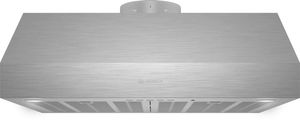
Bosch 800 Series 30” Stainless Steel Under Cabinet Range Hood
Shop Under Cabinet Range Hoods
Noise is the reason people stop using a hood, and quiet operation is where Bosch has always focused. This 800 Series unit is the right call for a 30 inch range in a condo, townhome, or open-plan kitchen where the cooktop is a few feet from the sofa. It mounts under existing cabinetry with minimal fuss, which makes it one of the easier upgrades from a rattling over the range microwave. As covered earlier, a hood you can talk over is a hood that actually runs during dinner.
Top Features
- Low-noise blower engineering: Runs quietly enough on lower speeds to keep conversation going in open layouts.
- 30 inch under cabinet fit: Drops into the standard opening left by an over the range microwave.
- LED cooktop lighting: Bright, cool-running task light where you are actually working.
- Bosch 800 Series build: Matches Bosch dishwashers, wall ovens, and cooktops across the kitchen.
Zephyr Monsoon Mini 30” Stainless Steel Insert Range Hood
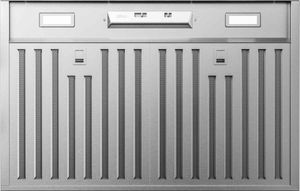
Custom hood surrounds only work if the mechanical package inside them is right, and this is that package. The Monsoon Mini is a 30 inch insert that installs inside a wood, plaster, or metal surround, so your designer or carpenter controls everything you see while Zephyr handles the blower, filters, lighting, and controls. It is the answer for a plaster hood over a range wall or a shiplap surround in a coastal-style kitchen. Specify the insert before the surround gets built, not after.
Top Features
- Insert or liner format: Hides all hardware inside a custom surround for a fully built-in look.
- 30 inch housing: Sized for a 30 inch range while leaving surround dimensions up to the design.
- Integrated lighting and controls: Keeps the visible interface minimal inside a decorative shell.
- Zephyr ventilation engineering: A ventilation-focused brand rather than an afterthought accessory.
Zephyr Ravenna Island 42” Smoke Gray Glass Island Range Hood
Wide island cooktops need wide capture, and 42 inches of coverage gives a 36 inch cooktop the overhang that open-air installs benefit from most. The Ravenna Island pairs that footprint with a smoke gray glass canopy, so it anchors the room without the visual weight of a large stainless box overhead. This is the choice for an entertaining kitchen where the island cooktop is in full view from the living space. It ventilates like an island hood should while reading as a light fixture.
Top Features
- 42 inch island coverage: Delivers real overhang past a 36 inch island cooktop for better side capture.
- Smoke gray glass canopy: A softer look than stainless above an island that everyone sees.
- Ceiling-mounted ducted install: Vents up and out for full removal of heat, steam, and odor.
- Multiple fan speeds with lighting: Doubles as island task lighting between cooking sessions.
KitchenAid 36” Stainless Steel Under Cabinet Range Hood
Shop Under Cabinet Range Hoods
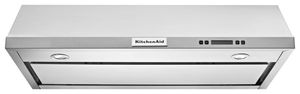
Not every kitchen needs a statement hood, and this is the practical everyday pick. At 36 inches it covers a 36 inch cooktop or gives a 30 inch range useful overhang, mounting under existing cabinets with a straightforward install and a stainless face that matches most kitchens already. It handles regular sautéing, roasting, and weeknight cooking without the ducting expense of a chimney or island hood. Buy it when the goal is dependable ventilation and a clean look rather than a design centerpiece.
Top Features
- 36 inch under cabinet width: Covers a 36 inch cooktop or overhangs a 30 inch range on both sides.
- Straightforward retrofit install: Mounts to existing cabinetry, keeping installation cost predictable.
- Dishwasher-safe filters: Simple upkeep with no consumable filter unless you configure it to recirculate.
- KitchenAid suite finish: Matches KitchenAid ranges, dishwashers, and refrigerators already in the kitchen.
Compare Kitchen Range Ventilation Hoods and Upgrade Your Kitchen Today
Style, venting method, and airflow have to work together, because a beautiful hood on undersized duct still lets smoke into the room and a 1,200 CFM blower over the wrong cooktop is money spent in the wrong place. Match the style to your layout, duct it outdoors whenever the house allows, and size the CFM to how you actually cook. Get those three right and the smoke detector stops being part of dinner.
Ready to compare kitchen range ventilation hoods in person? Shop at East Coast Appliance online or visit a showroom in the Richmond, Virginia Beach, Chesapeake, or Newport News area. Our specialists know these hoods spec by spec and will review your measurements and duct path with you, our own crews handle delivery and professional installation including ducting, and our in-house service department is right here in Virginia and North Carolina long after the sale. That is what buying from an independent retailer gets you instead of a call center and a drop-off at the curb.
Frequently Asked Questions about Kitchen Range Ventilation Hoods
A ducted under cabinet or wall mount chimney hood in the 400 to 600 CFM range fits the majority of kitchens with a cooktop against a wall. Under cabinet models keep the storage above the range, while chimney hoods trade that cabinet for a taller capture area and a stronger design statement.
No, ductless and convertible hoods can recirculate air through charcoal filters instead of venting outdoors. Ducted venting performs much better, though, because it is the only method that removes heat, moisture, and combustion byproducts from the house rather than just filtering odor.
Plan on roughly 100 CFM per linear foot of cooktop width for electric cooking, or total burner BTU divided by 100 for gas, which puts most kitchens between 400 and 600 CFM. Heavy searing, wok cooking, or a high-BTU professional range pushes that requirement to 600 to 1,200 CFM.
Match the cooktop width at minimum, so a 30 inch hood over a 30 inch cooktop and a 36 inch hood over a 36 inch cooktop. Going one size up for 3 inches of overhang on each side captures noticeably more from the front and side burners, and island installations benefit from that extra width most.
Downdraft vents are generally less effective than overhead hoods because smoke and heat rise naturally while a downdraft has to pull them sideways and down. They remain the right solution when nothing can be mounted above the cooktop, and they perform best with low-profile pans on the burners closest to the vent.
Professional installation typically runs from a few hundred dollars for a straight under cabinet swap into existing ductwork to well over a thousand when new duct, an exterior cap, or electrical work is involved. Island and downdraft installations sit at the high end because of ceiling framing, long duct runs, and floor or cabinet routing.
Why Trust East Coast Appliance?
Locally owned and operated since 1988, East Coast Appliance is the largest independent appliance dealer in Virginia. We sell it ALL — from new name-brand appliances to scratch-and-dent appliances to our very own refurbished appliances. Aside from our huge selection of every major brand and everyday low prices, what sets us apart from our competitors is that we service what we sell and that we are locally owned and operated with factory-trained associates. And if you’re a local, great news: East Coast Appliance is committed to providing the absolute lowest prices on the same available brand and model — simply bring in the ad of the local retail competitor while the lower price is in effect, and you'll receive your price match.
Shop Ventilation Hoods at East Coast
There is a reason we are dubbed “The Discount King” — for unbeatable deals, shop refrigerators online at East Coast Appliance. Our friendly associates are always happy to help you find the best column refrigerator for your home, whether you call us or use our online chat feature. Better yet, stop by one of our showrooms to see why we are the best appliance store in Virginia. Visit us today!